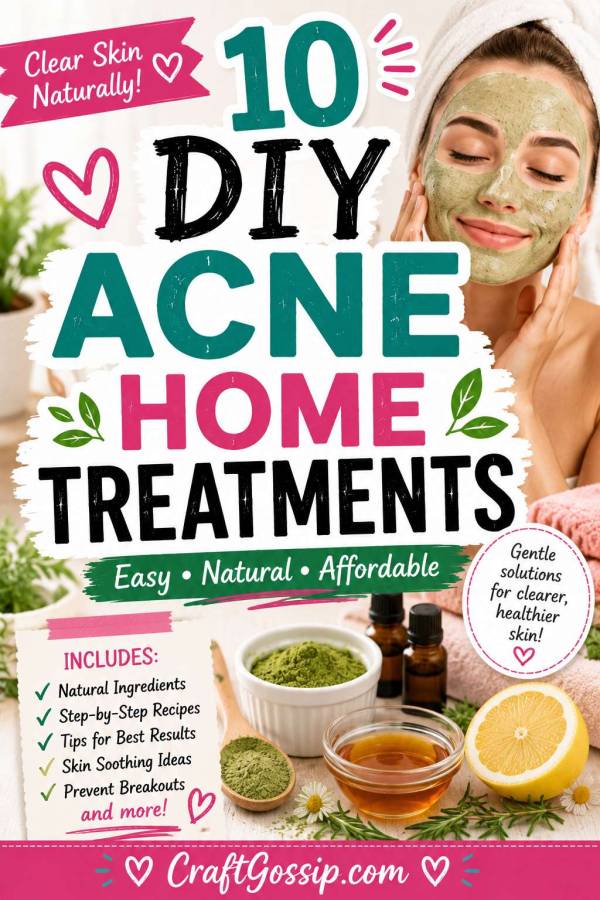
Acne always seems to arrive at the worst possible time, doesn’t it? Right before a photo, a meeting, a night out, or one of those mornings when you already feel tired before the day has even started. Whether you are dealing with the occasional pimple, teenage breakouts, oily skin, blocked pores, or adult hormonal spots, having a few simple DIY acne home treatments on hand can be really helpful.
This roundup brings together 10 homemade acne and blemish-care ideas from CraftBits, using ingredients such as basil, tomato, charcoal, tea tree, papaya, black tea, turmeric, and calming clays. Some are quick spot treatments, some are gentle cleansers, and others are simple masks you can make in small batches when your skin feels congested.
A little note before you start: homemade skincare should always be used with care. Patch test first, avoid the eye area, do not use lemon or strong essential oils before sun exposure, and never apply harsh ingredients to broken or very irritated skin. If your acne is painful, cystic, spreading, scarring, or not improving, it is worth speaking to a doctor or dermatologist. DIY recipes are lovely for gentle self-care, but they are not a replacement for medical acne treatment.
Acne Heat Mask
If your skin feels congested or your pores need a little softening before cleansing, this simple Acne Heat Mask is an easy place to start. It uses a warm washcloth method to help loosen surface oil and make cleansing feel more effective.
This is a good one for an evening skincare routine when you want something basic, inexpensive, and quick.
Read the tutorial here:
https://craftbits.com/project/acne-heat-mask/
Basil Acne Wash
Basil is not just for pasta sauce. This Basil Acne Wash uses fresh basil leaves steeped in boiling water to create a simple skin rinse. It is one of those old-fashioned kitchen beauty recipes that is easy to make in a tiny batch and use fresh.
This would suit readers who like very simple herbal skincare and do not want to buy a long list of ingredients.
Read the tutorial here:
https://craftbits.com/project/basil-acne-wash/
Acne ZAP Spot Treatment
This Acne ZAP Spot Treatment is a stronger spot-style recipe using myrrh tincture, lavender essential oil, lemon essential oil, and tea tree essential oil. Because essential oils can be irritating when used too strongly, this one should be used sparingly and only on the actual blemish area, not all over the face.
I would definitely add a patch-test reminder here and suggest avoiding this recipe if your skin is sensitive, broken, sunburned, or already irritated.
Read the tutorial here:
https://craftbits.com/project/acne-zap-spot-treatment/
Tomato Acne Paste
This Tomato Acne Paste is a simple two-ingredient mask using green clay and fresh tomato juice. Clay is often used in homemade masks for oily or congested skin, and tomato gives the recipe that classic fresh-kitchen beauty feel.
This is best made fresh and used straight away, rather than stored.
Read the tutorial here:
https://craftbits.com/project/tomato-acne-paste/
Activated Charcoal Acne Wash
Activated charcoal has become one of the most popular ingredients in DIY skincare, especially for oily, congested, or blemish-prone skin. This Activated Charcoal Acne Wash combines aloe vera gel, activated charcoal, and tea tree oil for a simple homemade wash or treatment.
Because charcoal can be messy, this is one to use over the sink with a dark washcloth nearby.
Read the tutorial here:
https://craftbits.com/project/activated-charcoal-acne-wash/
Black Tea & Lemon Toner
This Black Tea & Lemon Toner is another simple recipe for pimple-prone skin. Black tea brings tannins, while lemon gives the recipe a bright, fresh feel.
Important safety note: lemon juice can make skin more sensitive to sunlight, so this should only be used with caution, preferably in the evening, and washed off well. I would avoid it completely on sensitive, dry, peeling, or irritated skin.
Read the tutorial here:
https://craftbits.com/project/black-tea-lemon-toner/
Turmeric Spot Paste
This CraftBits Bruise & Wound Healer uses turmeric and water to create a simple paste. The original notes mention that it may help dry out pimples, but turmeric stains easily, so this is one to use carefully and not right before going anywhere.
Use a tiny amount, keep it away from pale towels and clothing, and do not scrub irritated skin trying to remove the yellow colour.
Read the tutorial here:
https://craftbits.com/project/bruise-wound-healer/
Papaya Honey & Lemon Facial
Papaya is often used in natural skincare because it contains fruit enzymes that help gently smooth the look of dull skin. This Papaya Honey & Lemon Facial combines papaya, honey, and lemon juice for a fresh face mask-style recipe.
Again, because lemon can be irritating and sun-sensitising, this is best treated as an occasional evening recipe and avoided by anyone with sensitive or broken skin.
Read the tutorial here:
https://craftbits.com/project/papaya-honey-lemon-facial/
Papaya and Oats Oily Skin Facial
For a softer option, this Papaya and Oats Oily Skin Facial is a lovely alternative. The papaya gives the recipe a fresh fruit-mask feel, while oats add a soothing element that makes it feel a little gentler than some stronger spot treatments.
This is a nice one for readers who want a more spa-at-home approach rather than a harsh pimple treatment.
Read the tutorial here:
https://craftbits.com/project/papaya-and-oats-oily-skin-facial/
DIY Calming Cleanser Bar for Sensitive Skin
If your skin is acne-prone but also easily irritated, a gentle cleanser can be more useful than constantly trying to dry everything out. This DIY Calming Cleanser Bar for Sensitive Skin uses goat’s milk soap base, calamine powder, oats, pink kaolin clay, lavender, tea tree, and chamomile essential oil.
It is a more modern CraftBits recipe and would be a good addition to this roundup because many people with breakouts are also dealing with redness, dryness, or over-treated skin.
Read the tutorial here:
https://craftbits.com/project/diy-calming-cleanser-bar-for-sensitive-skin/
Helpful Supplies For DIY Acne Recipes
If you are making homemade skincare, keep things clean and small-batch. A few helpful supplies include small glass jars, clean mixing bowls, cotton rounds, cosmetic spatulas, muslin cloths, activated charcoal powder, green clay, aloe vera gel, and waterproof labels.
Amazon is useful for basic skincare-making supplies such as small amber jars, cosmetic spatulas, charcoal powder, clay, and printable labels. If you prefer handmade or small-batch ingredients, Etsy can also be a good place to look for cosmetic clays and dried herbs, but keep it simple and only buy from sellers who clearly list their ingredients.
Homemade Skincare Safety Tips
When making DIY acne recipes, freshness matters. Anything made with fruit juice, fresh herbs, water, tea, milk, aloe, or other fresh ingredients should be used quickly and stored with care. If it smells strange, changes texture, grows mould, or you are not sure how long it has been sitting there, throw it out.
Always patch test first. Use clean utensils, clean jars, and clean hands. Do not share homemade skincare between family members if anyone has broken skin or active infection. Avoid essential oils on young children unless you have proper safety guidance, and be extra cautious during pregnancy, breastfeeding, or if you have allergies.
For more help with homemade skincare storage, this CraftGossip article is a useful companion read:
https://bathnbody.craftgossip.com/how-to-preserve-homemade-skincare-recipes-safely-a-handy-guide-for-diy-beauty-makers/2026/05/14/
DIY acne recipes can be a fun and inexpensive way to care for your skin, especially if you enjoy natural bath and body projects. The trick is to keep things gentle, clean, and realistic. A homemade mask or toner can be a nice part of your routine, but painful or persistent acne deserves proper care.
Start with the gentlest option, make a tiny batch, patch test first, and listen to your skin. Sometimes the best acne treatment is not the strongest one — it is the one your skin can actually tolerate.



Leave a Reply