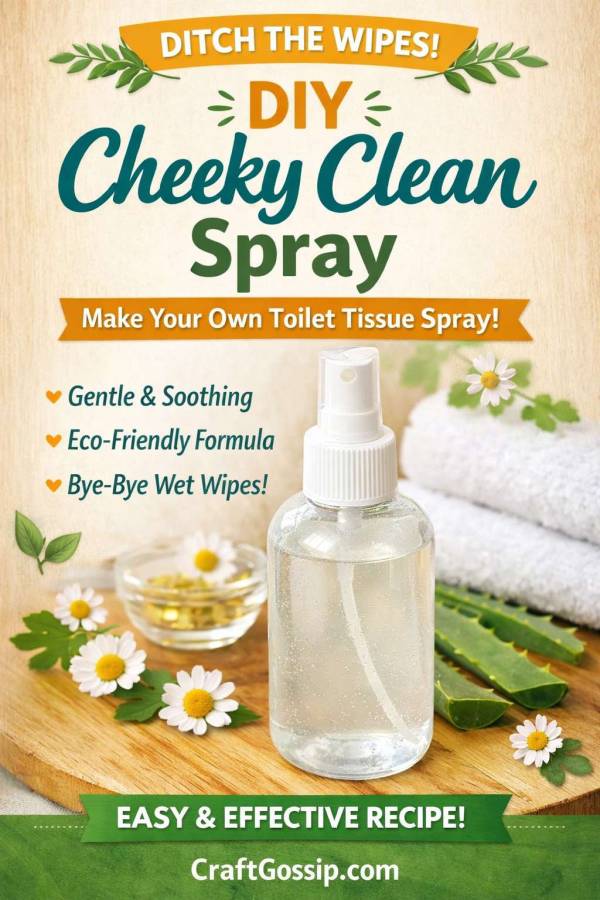
If you’ve been curious about making your own cheeky clean spray at home, you’re not alone. More and more people are looking for simple alternatives to disposable wet wipes, especially when they want something gentler, less wasteful, and easy to keep in the bathroom or pop into a bag.
A DIY toilet tissue spray can be a handy little bathroom staple. The idea is simple: instead of reaching for pre-moistened wipes, you lightly mist a bit of toilet paper and use that for a fresher clean. It cuts down on waste, skips the bulky packets, and gives you more control over what goes into the product.
And honestly, this is one of those small homemade swaps that feels a bit extra in the best possible way. A bit practical, a bit fancy, and surprisingly useful once you start using it.
This version is designed to feel gentle, lightly soothing, and easy to make if you already enjoy DIY bath and body projects. It uses skin-loving ingredients like chamomile hydrosol, aloe vera juice, glycerine, and a very small amount of essential oil for freshness. It is intended for external use only and should be sprayed onto toilet tissue rather than directly onto skin.
Why make a DIY toilet tissue spray?
There are a few reasons this kind of recipe appeals to DIY bath and body makers:
- it can be a more eco-conscious alternative to wet wipes
- it is easy to customise
- it feels gentler than heavily fragranced commercial products
- it is handy for travel, handbags, guest bathrooms, or everyday use
- it gives you a way to control the ingredients
This type of product has also become popular as a reusable wipe alternative, with commercial versions marketed as a spray-to-wipe bathroom product. The source article you shared was published on November 10, 2023, and focused on reverse-formulating a commercial “Cheeky Clean Spray” style product.
What this recipe is designed to do
This homemade cheeky clean spray is meant to:
- lightly dampen toilet tissue
- add a gentle, fresh feel
- include a little slip from glycerine
- avoid the over-soaked feel that some homemade sprays can have
- stay lightly thickened so the formula feels a bit more luxe than plain water
The original source article also used a preserved water-based formula with aloe, hydrosol, glycerine, a glucoside, xanthan gum, and a preservative system, with the finished product tested at pH 5.5.
DIY Cheeky Clean Spray Recipe
Makes: 200ml
Use: External use only, sprayed onto toilet tissue
Ingredients
Phase A
- 140g chamomile hydrosol
- 40g aloe vera juice
Phase B
- 8g vegetable glycerine
- 0.2g xanthan gum
- 8g propanediol
Phase C
- 2g coco glucoside
- 0.1g lavender essential oil
- 0.1g lemon myrtle essential oil
Phase D
- 2g broad-spectrum preservative suitable for water-based products
Equipment
- digital scale accurate to 0.1g
- small beakers or mixing bowls
- mini whisk or stirring rod
- 200ml fine mist spray bottle
- funnel
- label
How to make it
Step 1: Make the slurry
In a small container, combine the glycerine, xanthan gum, and propanediol. Stir until it forms a smooth slurry. This step matters because xanthan gum loves to clump the moment it touches water, and nobody wants jelly blobs floating around their bathroom spray.
Step 2: Add the watery ingredients
Slowly stir in the chamomile hydrosol and aloe vera juice. Add them gradually while mixing so the xanthan gum disperses evenly.
Step 3: Add the cleansing phase
Mix in the coco glucoside gently. Then add the lavender and lemon myrtle essential oils. Stir carefully so you do not whip too much foam into the formula.
Step 4: Add preservative
Add your preservative according to the supplier’s recommended usage rate for this type of water-based formula. Stir thoroughly.
Step 5: Bottle the spray
Pour the mixture into a clean 200ml spray bottle. Let it sit for around 24 hours so the texture fully settles before using.
How to use it
Spray lightly onto a piece of toilet tissue, then use as needed. Do not spray directly onto intimate skin. This is intended as a bathroom tissue spray for external hygiene use only.
Why these ingredients work
Chamomile hydrosol
Chamomile is often chosen in gentle skincare-style formulas because it has a soft, calming feel. It also makes the recipe feel more premium than plain distilled water.
Aloe vera juice
Aloe gives the spray a cooling, soothing touch and helps the formula feel less stark and watery.
Glycerine
This adds a little moisture and slip, which helps the toilet tissue feel softer during use.
Xanthan gum
Only a tiny amount is needed. In the original article, xanthan gum was used to slightly thicken the formula and help keep the ingredients evenly distributed.
Coco glucoside
This is a very mild cleanser and helps the formula feel more like a true freshening spray rather than just scented water.
Lavender and lemon myrtle essential oils
Used in very low amounts, these add a fresh scent and help the spray feel clean and uplifting without becoming overpowering.
Preservative
Because this is a water-based product, a proper preservative is not optional. Without one, the spray can grow bacteria, yeast, or mould.
Important safety notes
Because this is a water-based personal care style recipe, hygiene and preservation really matter.
- Use a broad-spectrum preservative suitable for water-based formulas.
- Do not skip the preservative.
- Make small batches if you are new to DIY body products.
- Label the bottle with the date you made it.
- Keep the recipe for external use only.
- Avoid use on broken, irritated, or freshly shaved skin.
- Stop using it if irritation occurs.
- Patch test first, especially if you are sensitive to essential oils.
If you want to be extra careful, check the pH of your final product and aim for a skin-friendly range.
Can you make this without essential oils?
Yes, and plenty of readers will probably prefer that version.
If you want an ultra-gentle unscented version, simply leave out the essential oils and replace that tiny percentage with a little more hydrosol. That is often the better option for very sensitive skin or for households that prefer fragrance-free products.
Can you use distilled water instead of hydrosol?
Yes. Distilled water is perfectly fine if you want a more budget-friendly version. The chamomile hydrosol just makes the spray feel a little more soothing and boutique.
A simple version could use:
- distilled water
- aloe vera juice
- glycerine
- a tiny amount of xanthan gum
- preservative
That gives you the same general idea with fewer specialty ingredients.
Why people are switching from wipes to spray
Disposable wipes may feel convenient, but many people are trying to reduce waste in the bathroom and avoid buying single-use products over and over again. A toilet tissue spray gives that same “freshened up” feeling without relying on packets of wipes.
It is one of those small DIY changes that feels surprisingly satisfying. A bit like making your own linen spray or hand scrub — not essential, but once you have it, you keep reaching for it.
Handy tips before you make it
- Use a fine mist bottle rather than a stream spray.
- Do not overdo the xanthan gum or the spray may clog.
- Add the glucoside gently to avoid bubbles.
- Store away from direct heat and sunlight.
- Make sure your bottle and tools are well sanitised before you begin.
Variations to try
Once you have the basic idea down, you can experiment with:
Fragrance-free version
Best for very sensitive users.
Aloe-heavy version
Increase aloe slightly for more of a soothing feel.
Travel-size version
Bottle it in a 50ml spray bottle for handbags or travel kits.
Botanical bathroom version
Swap chamomile hydrosol for lavender hydrosol for a different scent profile.
A practical little bathroom DIY
This is one of those recipes that sounds slightly quirky until you make it, then suddenly it makes complete sense. It is small, useful, and feels like a thoughtful homemade swap for anyone trying to cut down on wipes or create a gentler bathroom routine.
And let’s be honest, the best DIY projects are often the ones that solve an everyday annoyance. Not just the pretty ones that sit on a shelf looking cute while your cupboard of half-used craft supplies quietly judges you.

Espceially as disposable wet-wipes aren’t actually disposable.