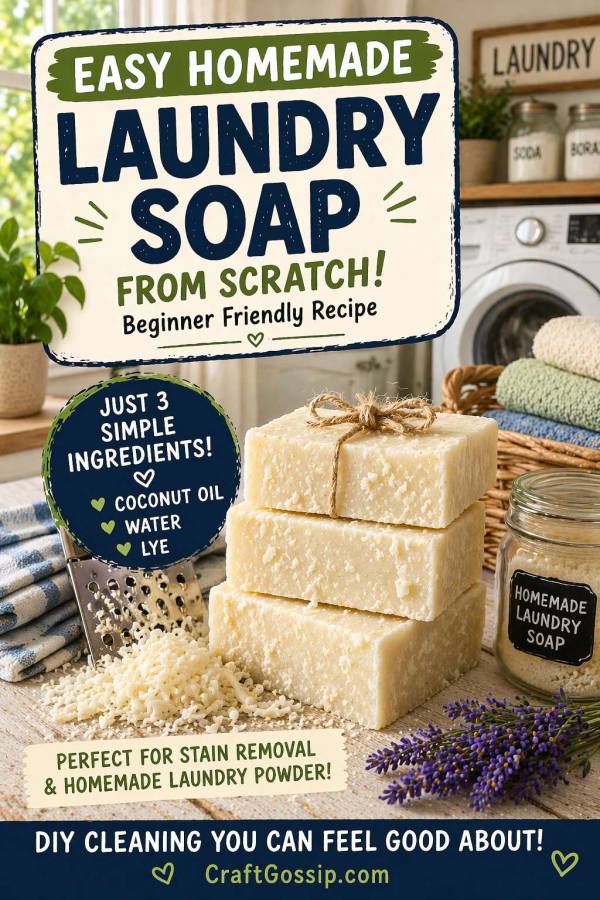
If you’ve been curious about making your own laundry soap from scratch but keep imagining a complicated process, a bench full of equipment, and a very good chance of making a mess, this is a great place to start. A simple laundry soap bar is one of the most practical beginner soap projects because it is useful, straightforward, and easy to understand once you break it down step by step.
Homemade laundry soap bars are popular for pre-treating stains, grating into powdered laundry soap blends, and keeping on hand for all those little laundry disasters that seem to appear out of nowhere. Muddy socks, grimy cuffs, food spills, and mystery marks all seem a little less annoying when you’ve got a hardworking soap bar ready to go.
This beginner-friendly recipe uses coconut oil to make a firm, cleansing bar that works beautifully for laundry and general household cleaning. If you’ve been searching for easy homemade laundry soap, how to make laundry soap from scratch, or beginner laundry soap bar recipe, this is a practical one to keep on hand.
Why Make Homemade Laundry Soap?
There’s something satisfying about making a cleaning product you’ll actually use. This is not one of those projects that sits on a shelf looking pretty while everyone forgets it exists. A homemade laundry soap bar earns its place very quickly.
A good laundry soap bar can be used for:
- rubbing directly onto stains before washing
- grating into homemade powdered laundry soap
- hand-washing small items
- scrubbing collars, cuffs, and socks
- general household cleaning
It’s also a nice option if you like knowing exactly what is in the products you use around the house.
What Makes Laundry Soap Different From Bath Soap?
Laundry soap is made for cleaning fabric rather than pampering skin, so it is usually formulated a little differently from a body bar. A laundry soap bar is meant to be firm, cleansing, and practical rather than creamy or moisturizing.
That strong cleaning power is exactly what makes it useful in the laundry, especially for stain treatment and heavily soiled fabrics.
Easy Homemade Laundry Soap Recipe
Makes:
Around 6 to 7 bars, depending on the size of your mold
You will need:
- 500g coconut oil
- 190g distilled water
- 91g sodium hydroxide (lye)
- 10 to 15 drops lavender essential oil, optional
Equipment:
- digital kitchen scale
- heat-safe mixing bowls or containers
- stick blender
- silicone loaf mold or similar mold
- gloves
- safety glasses
- spoon or spatula
Important Soapmaking Safety
Before you start, it’s important to treat the lye step with care. Sodium hydroxide is necessary for making soap, but it is caustic before the soap is fully made.
A few sensible precautions make a big difference:
- wear gloves and safety glasses
- work in a well-ventilated area
- keep children and pets away from your workspace
- always add lye to water, never water to lye
- measure everything carefully by weight
- use soap-safe containers and tools
This is the sort of project that rewards paying attention. Not the best time for multitasking, chatting on the phone, or wandering off halfway through.
How to Make Laundry Soap From Scratch
Step 1: Measure your ingredients
Weigh the distilled water into one heat-safe container. In a separate container, weigh the sodium hydroxide. Then weigh the coconut oil into a large mixing bowl.
Step 2: Make the lye solution
Slowly add the sodium hydroxide to the distilled water while stirring carefully. Never pour the water onto the lye. The mixture will heat up very quickly, so set it aside in a safe place to cool slightly.
Step 3: Melt the coconut oil
If the coconut oil is solid, melt it gently until fully liquid. Let it cool slightly if it becomes very hot.
Step 4: Combine the lye solution and oil
Carefully pour the lye solution into the melted coconut oil. Stir gently to begin combining the mixture.
Step 5: Blend to trace
Use a stick blender in short bursts until the mixture thickens to trace. This means it will start to look like a light custard or thin pudding and will leave a faint trail on the surface when drizzled.
Step 6: Add optional fragrance
If you want a light scent, stir in the lavender essential oil once the soap reaches trace.
Step 7: Pour into the mold
Pour the soap mixture into your mold and smooth the top with a spatula if needed.
Step 8: Let it harden
Leave the soap to set until it is firm enough to unmold.
Step 9: Cut into bars
Once the loaf is solid, remove it from the mold and cut it into bars.
Do You Need to Cure Laundry Soap?
Yes, it’s still a good idea to let the bars cure before using them regularly. Even if the bars feel firm quite quickly, curing helps excess water evaporate and gives you a harder, longer-lasting bar.
Place the bars in a dry, airy space and let them sit for several weeks. It takes a little patience, but the finished bars will be better for it.
Why Coconut Oil Works Well for Laundry Soap
Coconut oil is a popular choice for laundry soap because it makes a hard, cleansing bar with plenty of cleaning power. For laundry and household cleaning, that is exactly what you want.
It’s especially handy for:
- stain removal
- pre-treating dirty areas
- scrubbing work clothes
- grating into powdered laundry soap
- cleaning cloths and small washable items
This is one of the reasons coconut oil soap is such a good beginner recipe for laundry use. It is simple and very practical.
How to Use Homemade Laundry Soap
Once your bars are cured, there are a few easy ways to use them around the house.
For stain removal
Wet the stained fabric slightly and rub the bar directly onto the mark before washing.
For homemade laundry powder
Grate the bar and add it to your preferred powdered laundry soap mix.
For hand-washing
Rub a little soap into water and wash small items gently by hand.
For general cleaning
Use the bar for cleaning cloths, brushes, or other washable household items.
Best Molds for Beginner Soapmakers
You do not need anything overly fancy to get started. A basic silicone loaf mold works beautifully, but other simple soap-safe molds can work too.
Good options include:
- silicone loaf molds
- silicone muffin trays
- sturdy soap-safe containers
- lined box molds
Start simple. There is no need to collect half a craft cupboard of equipment before making your first batch.
Tips for First-Time Success
Measure by weight
Soapmaking is not the time for guessing. Use a digital scale and measure everything carefully.
Have your mold ready
Coconut oil soap can move fairly quickly, so it helps to have your mold prepared before you begin blending.
Keep the recipe simple
A single-oil laundry soap is much easier for beginners than a more complicated blend.
Label your bars
A plain bar of laundry soap can look suspiciously like regular soap if it’s left sitting in the wrong place.
Start with a manageable batch
A small beginner batch is easier to work with and much less stressful than trying to make a huge amount at once.
Homemade Laundry Soap FAQ
Is homemade laundry soap the same as detergent?
No, soap and detergent are different products. A homemade laundry soap bar is still very useful for stain treatment, hand-washing, and homemade laundry blends.
Can beginners make laundry soap from scratch?
Yes, this is a good beginner project because the ingredient list is short and the method is easy to follow.
Can I use laundry soap on skin?
This recipe is intended for laundry and household cleaning rather than bathing or skincare.
Why is coconut oil used in laundry soap?
Coconut oil helps make a firm, cleansing bar that works well for washing and stain treatment.
What scent works well in laundry soap?
Lavender is a popular choice if you want a fresh, classic laundry-style scent, but it is completely optional.
A Practical Soap Project You’ll Actually Use
If you’ve been wanting to learn how to make homemade laundry soap from scratch, this is a lovely beginner project to try. It’s simple, useful, and easy to understand, and the finished bars are the kind of handmade item that genuinely earns its place in the house.
And honestly, I do love a DIY that pulls its weight. Pretty crafts are wonderful, but a soap bar that tackles dirty socks has a charm all of its own.




Leave a Reply