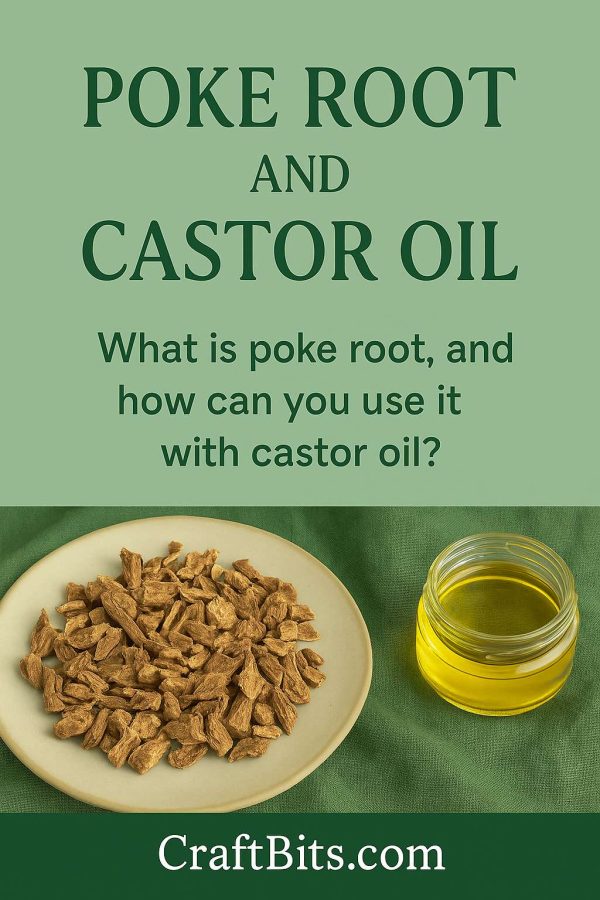
Poke root is one of those herbs that stirs both wonder and worry—used for generations in lymphatic support and breast care, but only in the tiniest amounts. Here’s what I’ve learned about it, and two ways I combine it safely with castor oil for my own self-care rituals.
Let’s Start with the Obvious: Poke Root Isn’t for the Casual DIYer
I’m well into my self-heal era. You know—those quiet, intentional steps we start taking when our hormones start whispering (or shouting), our digestion slows, and our body asks us to pay attention. And lately, I’ve been exploring herbs with deeper, old-world roots—poke root being one of them.
Known for its powerful effect on the lymphatic system, poke root has long been used by folk herbalists to ease breast tenderness, swollen glands, cysts, and sluggish immunity. But here’s the deal: poke root is also toxic if misused. It’s one of those plants you respect deeply, use sparingly, and never take lightly.
So how am I using it? Externally only, and always blended with castor oil, my go-to carrier for deep absorption and gentle delivery.
What Exactly Is Poke Root?
- Botanical name: Phytolacca americana
- Native to: North America
- Parts used: Root (carefully dried, powdered, or infused)
- Traditional use: Breast issues, lymph congestion, cysts, sore throats, and skin flare-ups
- Also known as: Inkberry, pokeweed, pigeonberry
Before We Go Any Further – A Safety Note:
- Never ingest poke root unless under the care of a trained herbalist.
- Always use externally only, in very small amounts, and avoid broken skin.
- Not for pregnant or breastfeeding women.
- Patch test before applying to sensitive areas.
DIY Recipes Using Poke Root + Castor Oil
Poke Root Lymphatic Castor Balm
Great for tender breasts, underarm puffiness, or swollen lymph nodes
You’ll Need:
- 1 tbsp dried poke root, finely ground
- ½ cup castor oil
- 1 tbsp beeswax
- 1 tsp shea butter (optional, for creamier texture)
- 3 drops lavender essential oil (optional)
- Clean glass jar (60–100ml)
How to Make It:
- Gently infuse the poke root in castor oil by warming it in a double boiler on very low heat for 1–2 hours (or cold-infuse over 1 week in a sunny window).
- Strain the oil through cheesecloth or muslin to remove plant material.
- Return infused oil to a clean pot, add beeswax and shea butter, and melt over low heat.
- Remove from heat and stir in lavender EO if using.
- Pour into jar, let cool, and label clearly with external use only.
How to Use It:
- Massage a small amount into armpits, breast tissue (avoiding nipples), or anywhere lymph feels slow or tender.
- Best used 2–3 nights a week.
- Pair with a warm compress or castor oil pack for deeper support.
Poke & Castor Spot Treatment Oil (for Cysts + Inflammation)
For under-the-skin bumps, small cysts, or stubborn spots
You’ll Need:
- 2 tsp poke root infused castor oil (from recipe above)
- 2 tsp tamanu oil (optional, for extra anti-inflammatory effect)
- 1 drop tea tree or frankincense essential oil
- Small roller bottle or dropper bottle
How to Make It:
- Blend all ingredients and store in a small amber bottle.
- Shake before each use.
How to Use It:
- Apply one drop to targeted areas (like skin cysts or deep blemishes).
- Do NOT apply to broken skin.
- Use once daily, max 3–4 times per week.
Poke root isn’t pretty or trendy. It’s not for everyone. But if you’re deep into your own healing era—trying to get back in touch with your body’s signals, and you’re craving gentle but effective tools—this herb might be worth exploring.
Just remember: poke root asks for respect. It’s not a beginner’s herb. But paired with castor oil, used intentionally and externally, it’s become a small but powerful part of my self-care toolkit.

Leave a Reply