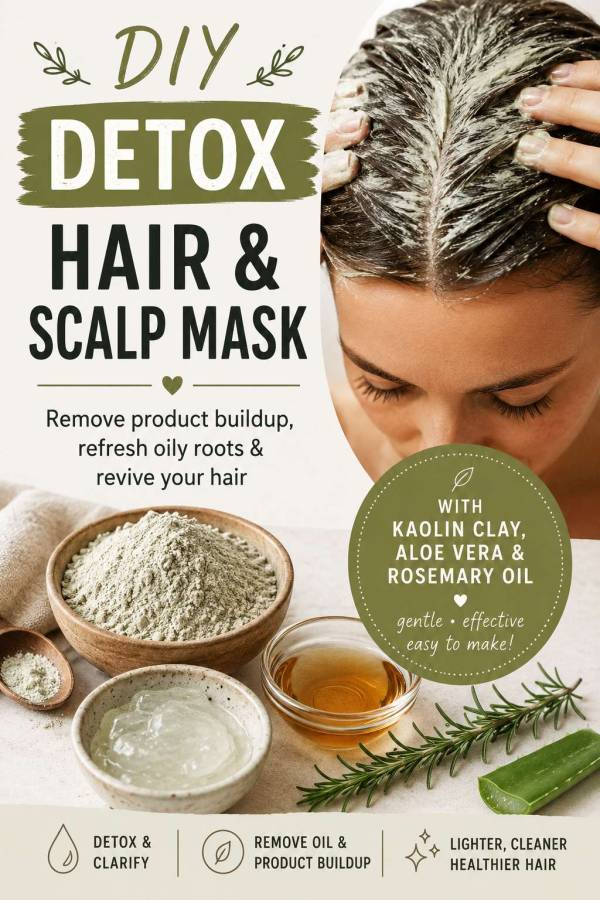
Every now and then, my hair reaches the point where ordinary shampoo appears to throw up its hands and admit defeat.
The roots still feel coated, the lengths look dull and there is usually enough dry shampoo hiding around my scalp to qualify as an archaeological discovery. Add hairspray, styling cream, sweat and a little Queensland humidity, and somehow freshly washed hair can still feel decidedly un-fresh.
That is when an occasional DIY detox hair and scalp mask can come in handy.
Before we go any further, I am using the word “detox” in the beauty sense. This mask will not draw mysterious toxins from your body, cleanse your liver through your hair follicles or resolve your emotional baggage while it dries.
Its job is much more practical: helping to loosen excess oil, dead skin and styling-product residue so your hair feels cleaner and lighter.
This homemade clarifying hair mask uses cosmetic-grade kaolin clay, aloe vera gel and diluted apple cider vinegar. It is designed for an otherwise healthy scalp with oily roots or visible product buildup.
It is not suitable for skin that is red, scratched, burning, painful or actively inflamed.
What Is a Detox Hair and Scalp Mask?
A detox hair mask is an occasional pre-shampoo treatment used to help remove residue from the scalp and hair.
That buildup may include:
- Dry shampoo
- Hairspray
- Styling wax and pomade
- Leave-in conditioner
- Hair oils and serums
- Silicone-rich styling products
- Excess scalp oil
- Sweat and dirt
- Conditioner applied too close to the roots
Shampooing the scalp remains the most important way to remove excess oil, dead skin and product residue. Dermatologists recommend applying shampoo mainly to the scalp rather than rubbing it through the full length of the hair, which helps clean the roots without unnecessarily drying the ends.
A clay mask can be used as an occasional extra clarifying step when your normal wash no longer seems to be doing quite enough.
Why Use Kaolin Clay in a Hair Mask?
Bentonite clay often receives most of the attention in homemade detox hair recipes. It swells dramatically and creates the kind of bubbling bowl that looks very convincing on social media.
Unfortunately, bentonite can also be drying and surprisingly difficult to rinse out of thick, curly, damaged or porous hair.
Kaolin clay is generally finer and milder. It still helps absorb surface oil, but it creates a smoother mask that is usually easier to spread and wash away.
Always choose cosmetic-grade kaolin clay intended for beauty products.
Do not substitute pottery clay, garden clay or the forgotten bag sitting at the back of the craft cupboard. Craft supplies and cosmetic ingredients are not automatically interchangeable, no matter how temptingly similar they look.
DIY Detox Hair and Scalp Mask Recipe
This recipe makes enough for short to medium-length hair. Double it for long or very thick hair, although you may only need to apply it to the scalp and the first few inches of your hair.
Ingredients
- 3 tablespoons cosmetic-grade kaolin clay
- 2 tablespoons plain aloe vera gel
- 1 tablespoon apple cider vinegar
- 2 to 4 tablespoons lukewarm water
- 1 teaspoon jojoba oil
- 1 drop rosemary essential oil, optional
Rosemary oil is optional. It appears in many commercial scalp products, but it is still a concentrated essential oil and may irritate sensitive skin.
Leave it out if your scalp is reactive, inflamed or particularly sensitive to fragranced products.
Equipment
- Small glass, ceramic or plastic bowl
- Silicone, wooden or plastic spoon
- Hair clips
- Old towel
- Shower cap, optional
- Hair-colour applicator brush, optional
A hair-colour brush makes the mask much easier to apply directly along the scalp without coating your ears, shoulders and bathroom bench in pale clay.
A soft silicone scalp brush can also be useful when shampooing the treatment away, provided your scalp is healthy and unbroken.
How to Make the Detox Mask
Place the kaolin clay in a small bowl.
Add the aloe vera gel, apple cider vinegar and jojoba oil.
Stir in two tablespoons of lukewarm water.
Continue adding water one teaspoon at a time until the mixture has the consistency of thick yoghurt. It should spread easily without dripping down your face.
Add one drop of rosemary essential oil, if using, and mix thoroughly.
Use the treatment immediately.
Do not make a large batch and store it in the bathroom. Once water and fresh aloe have been added, the mask does not contain a proper cosmetic preservative and may become contaminated during storage.
How to Apply a Detox Hair and Scalp Mask
Begin with dry or slightly damp hair.
Place an old towel around your shoulders. Kaolin clay has a remarkable ability to locate the one clean shirt you were hoping to wear for the rest of the day.
Divide your hair into four or more sections.
Apply a thin layer of the mask directly along the scalp, concentrating on areas where you use the most dry shampoo, hairspray or styling products.
Once the scalp has been covered, smooth any remaining mixture over oily or coated sections of the hair.
Do not heavily coat dry or damaged ends.
If your ends are particularly dry, apply a small amount of conditioner or jojoba oil to them before using the clay mask elsewhere.
Gently massage the mask over the scalp with the pads of your fingers for approximately 30 seconds. Do not use your fingernails.
Cover your hair loosely with a shower cap and leave the mask on for five to ten minutes.
Do not allow the clay to dry into a hard shell.
Once clay dries completely, it can become difficult to rinse and may leave the hair feeling stiff, rough or tangled.
Rinse thoroughly with lukewarm water.
Follow with a gentle shampoo, concentrating on the scalp.
Apply conditioner to the middle and ends of the hair as usual.
Why These Ingredients Work Well Together
Kaolin Clay
Kaolin clay absorbs surface oil and gives the treatment its clarifying texture.
Its role is to help remove grease and residue. It is not medically pulling toxins from the bloodstream through your scalp, despite what a particularly enthusiastic social-media post may suggest.
Aloe Vera Gel
Aloe vera helps turn dry clay powder into a smooth, spreadable mask.
Choose plain aloe vera gel without alcohol, strong fragrance or bright colouring.
Apple Cider Vinegar
Apple cider vinegar helps thin the clay and is often used in homemade clarifying hair treatments.
Always dilute vinegar before applying it to the scalp.
Do not use apple cider vinegar on scratched, broken or inflamed skin, as it may sting and worsen irritation.
For a grainier treatment aimed at ordinary flakes and buildup, try our apple cider vinegar scalp scrub.
Jojoba Oil
Jojoba oil helps soften the mask so it does not feel quite as drying as clay and vinegar alone.
It is also lighter than coconut or castor oil, making it more suitable for a clarifying treatment.
Very oily scalps can reduce the amount to half a teaspoon or omit it completely.
Rosemary Essential Oil
Rosemary oil has become a popular ingredient in commercial scalp oils, serums and shampoos.
One small study involving people with androgenetic alopecia compared rosemary oil with 2% minoxidil over six months. Both groups showed increased hair counts after six months, although scalp itching increased in both groups during the study. That does not prove a homemade rosemary hair mask will regrow hair, but it helps explain why the ingredient appears in so many modern scalp products.
Use only one drop in this full recipe.
Never apply rosemary essential oil directly from the bottle. Essential oils can trigger irritation or allergic contact dermatitis, particularly on already sensitive skin.
A Gentler Detox Mask for Dry or Damaged Hair
Clay can feel too drying on bleached, brittle, curly or naturally dry hair.
For a softer version, combine:
- 2 tablespoons cosmetic-grade kaolin clay
- 3 tablespoons plain aloe vera gel
- 2 tablespoons fragrance-free conditioner
- 1 teaspoon jojoba or argan oil
- Enough lukewarm water to create a creamy consistency
Apply this version mainly to the scalp and the first few inches of hair.
Leave it on for no longer than five minutes before rinsing and shampooing.
When your hair needs moisture rather than clarification, choose one of these DIY moisturising hair masks instead.
A moisturising mask and a detox mask solve very different problems, despite both involving a bowl, an old towel and a bathroom that looks as though a small beauty laboratory has exploded.
Detox Mask for Very Oily Roots
For oily hair that becomes coated quickly, use:
- 3 tablespoons cosmetic-grade kaolin clay
- 1 tablespoon plain aloe vera gel
- 1 tablespoon apple cider vinegar
- 3 to 5 tablespoons lukewarm water
Leave out the added oil.
Apply the mixture mainly to the scalp and oily roots, avoiding the dry ends.
Leave it on for five minutes before rinsing and shampooing thoroughly.
Do not use this stronger version more than once every one to two weeks.
Excessive clarifying may leave the scalp dry, tight and irritated, encouraging you to pile on even more oils and treatments to repair the damage.
Can You Add Activated Charcoal?
You can add ¼ teaspoon of cosmetic-grade activated charcoal to the main recipe, but it is not essential.
Charcoal may help absorb oil and can make the mask look especially dramatic, but it also makes the treatment considerably messier.
It may stain pale towels, porous grout and bathroom surfaces, so protect anything you would prefer not to turn grey.
Use charcoal because you want a stronger oil-absorbing treatment—not because someone online has announced that your scalp is harbouring years of toxins and unresolved emotions.
Can You Use Bentonite Clay Instead?
Bentonite clay can be substituted for kaolin, but the mask will behave differently.
It absorbs more water, thickens quickly and can be harder to remove from thick, curly or damaged hair.
To make a bentonite version, combine:
- 2 tablespoons cosmetic-grade bentonite clay
- 1 tablespoon plain aloe vera gel
- 1 tablespoon apple cider vinegar
- 4 to 6 tablespoons lukewarm water
Add the water gradually because bentonite continues thickening as it sits.
Keep the mask moist and rinse it away before it dries.
For a beginner-friendly homemade hair mask, I prefer kaolin. There is considerably less chance of finishing wash day with what feels like half a pottery studio lodged between your curls.
Who Should Not Use a Clay Scalp Mask?
Skip this DIY treatment if your scalp is:
- Red or inflamed
- Burning or painful
- Scratched or bleeding
- Blistered or weeping
- Sunburnt
- Experiencing an eczema or psoriasis flare
- Reacting to hair dye, essential oils or another product
- Showing possible signs of infection
- Extremely dry or sensitive
An itchy scalp may have many causes, including dandruff, eczema, psoriasis, ringworm, head lice or allergic contact dermatitis.
When itching begins after applying a particular hair, skincare or muscle product, stop using the suspected product rather than layering clay, vinegar and essential oils over the top. The American Academy of Dermatology advises that an itchy rash may be caused by a reaction to shampoo, conditioner, hair dye or another product touching the scalp.
As I discovered after getting Deep Heat muscle cream too close to the back of my hairline, not every itch means the scalp is dirty.
Sometimes the skin is irritated and needs fewer products—not a more impressive homemade treatment.
How Often Should You Detox Your Hair?
Most people do not need a weekly detox mask.
A sensible starting schedule is:
- Heavy styling-product users: Every one to two weeks
- Occasional product users: Once or twice a month
- Dry or colour-treated hair: Once a month or less
- Sensitive scalp: Skip clay masks or seek professional advice
- Inflamed scalp: Do not use until the irritation has resolved
Pay attention to how your hair behaves after treatment.
If it feels lighter, cleaner and easier to style, the mask has probably done its job.
If it feels rough, tangled, unusually dry or your scalp begins itching, wait longer before trying it again—or accept that clay masks may not suit your hair.
Signs You Are Clarifying Too Often
Reduce or stop detox treatments if you notice:
- Tightness across the scalp
- Increased itching
- Redness or tenderness
- More dry flakes
- Straw-like hair
- Excessive tangling
- Increased breakage
- Hair colour fading quickly
- Roots becoming oily sooner after washing
There is a surprisingly fine line between removing product buildup and stripping everything within a three-kilometre radius of your hair follicles.
How to Prevent Hair Product Buildup
A detox treatment is useful occasionally, but preventing heavy buildup is much easier than removing it.
Apply shampoo mainly to the scalp rather than scrubbing it roughly through the lengths.
Use dry shampoo sparingly and wash it out thoroughly instead of repeatedly layering more over the top.
Apply conditioner and thick masks mainly to the middle and ends rather than directly to oily roots.
Wash hairbrushes, combs, pillowcases and styling tools regularly.
Use less styling product than you think you need. Most of us have applied a harmless-looking amount of hair serum only to discover that it apparently contained enough oil to lubricate farm machinery.
An ordinary clarifying shampoo can also be useful when your regular shampoo no longer removes styling residue.
What to Use After a Detox Hair Mask
After rinsing and shampooing, apply conditioner to the middle and ends of your hair.
Very dry hair may benefit from a small amount of leave-in conditioner.
Avoid immediately following the treatment with heavy scalp oils, waxes or another layer of dry shampoo. Give your freshly clarified roots a little breathing room before rebuilding the exact product collection you just removed.
When your hair needs nourishment instead of clarifying, try this nourishing hot castor oil hair mask.
CraftBits also has a traditional rosemary hot oil hair treatment, although I would use considerably less rosemary essential oil than the older recipe suggests. One or two drops properly diluted in carrier oil is a more cautious approach than using a full teaspoon.
When to See a Doctor About Your Scalp
Homemade hair masks are intended for ordinary beauty concerns such as excess oil and product residue.
Speak with a pharmacist, GP or dermatologist if you have:
- Persistent or severe itching
- A spreading scalp rash
- Pain, swelling or heat
- Blisters or weeping skin
- Open sores or scabs
- Patchy hair loss
- Thick or widespread scaling
- Possible signs of infection
- Symptoms that began after using a chemical product
- Irritation that repeatedly returns
Seek urgent medical help if you experience facial or throat swelling, difficulty breathing or widespread hives.
A healthy scalp carrying a little too much dry shampoo may appreciate this mask.
An actively angry scalp does not need a detox. It needs the irritating product removed, a simple routine and, when symptoms persist, someone medically qualified to look at it.
Used occasionally and rinsed thoroughly, this kaolin clay detox hair and scalp mask can leave oily, product-coated hair feeling lighter, cleaner and much less burdened by last week’s styling decisions.
Just remember to keep the mixture creamy, never let the clay turn rock-hard and protect your good towels.
Kaolin may be gentle by clay standards, but it still has absolutely no respect for white bathroom linen.





Leave a Reply