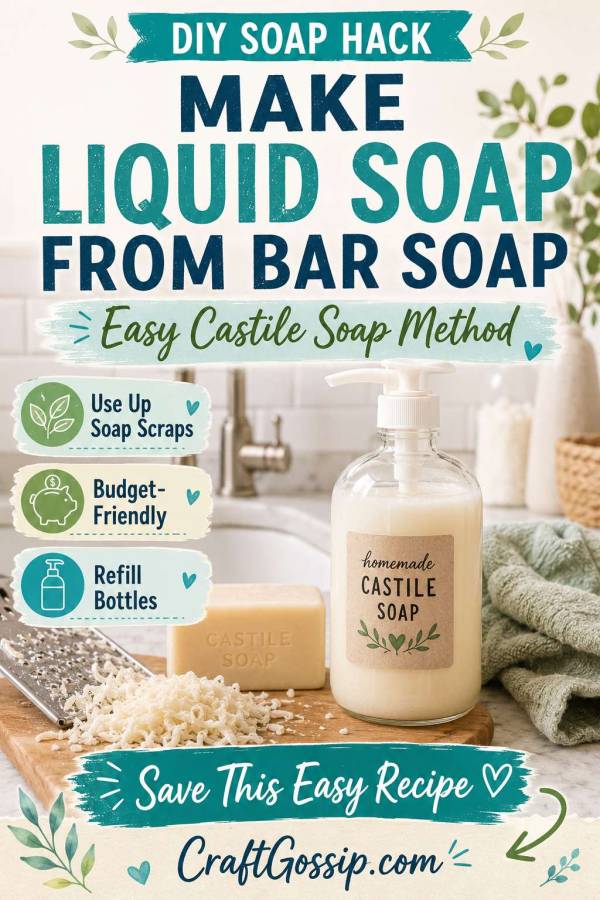
Making liquid castile soap from bar soap is one of those wonderfully thrifty home projects that feels far more clever than it actually is. You take a solid bar of soap, grate it, melt it into hot water, let it thicken, and suddenly you have a bottle of homemade liquid soap ready for the sink.
It is simple, practical, and a very satisfying way to stretch a bar of soap further.
If you are trying to reduce waste, refill your soap dispensers, use up soap scraps, or avoid buying another plastic bottle of hand soap, this is a lovely little DIY to keep in your back pocket. It is also a good project if you are curious about soap making but not quite ready to handle lye or dive into full cold-process soap making.
This method does not make traditional liquid soap from scratch. True liquid soap is usually made with potassium hydroxide, while bar soap is made with sodium hydroxide. What we are doing here is turning a finished bar of castile-style soap into a pourable liquid soap mixture. For everyday use around the home, it works beautifully, as long as you understand that homemade soap likes to have a bit of personality.
Sometimes it is silky. Sometimes it is gel-like. Sometimes it needs a good shake and a stern talking-to.
What Is Castile Soap?
Castile soap is a plant-based soap traditionally made with olive oil, although many modern castile soaps include other vegetable oils such as coconut oil, hemp oil, or sunflower oil. It is popular because it is versatile, simple, and useful for both personal care and household cleaning.
You can buy castile soap as a liquid, but bars are often cheaper, easier to store, and handy if you want to make your own liquid soap in smaller batches.
This tutorial is ideal for turning a plain castile soap bar into liquid hand soap, refill soap, or a base for simple homemade cleaning recipes.
If you are new to handmade soap, you may also enjoy our beginner-friendly guide to melt and pour soap making, which is another easy way to experiment with soap without working with lye.
Why Make Liquid Castile Soap From A Bar?
There are plenty of good reasons to turn bar soap into liquid soap.
It saves money, especially if you can buy castile bars in bulk.
It helps reduce plastic waste by refilling bottles you already own.
It uses up leftover soap ends and scraps.
It gives you control over scent and thickness.
It is useful for hand soap, cleaning, and simple DIY bath and body projects.
It is also surprisingly handy if you have a bathroom full of almost-finished soap bars that nobody wants to use because they have become tiny, slippery little escape artists.
Instead of throwing them away, you can grate them down and turn them into a practical liquid soap.
Ingredients
1 bar castile soap, about 4 ounces or 110 grams
4 cups distilled water
1 tablespoon vegetable glycerin, optional but recommended
Optional: 5–10 drops skin-safe essential oil or soap-safe fragrance oil
Optional: broad-spectrum preservative if storing longer term
Supplies
Box grater or knife
Saucepan or slow cooker
Wooden spoon or whisk
Measuring jug
Funnel
Clean pump bottle or storage jar
Stick blender, optional
Labels
A simple funnel and a reusable pump bottle make this project much less messy. If you are stocking up on basic bath and body supplies, Amazon is handy for glass soap dispensers, funnels, soap labels, stick blenders, and small digital scales.
Basic Ratio For Liquid Castile Soap From Bar Soap
A good starting ratio is:
1 part grated castile soap
8 parts distilled water
For a standard 4-ounce bar of soap, start with about 4 cups of water.
Different soap bars behave differently, so this ratio is a starting point rather than a strict law. Olive-oil-heavy castile soap may feel silkier and thinner, while bars with coconut oil or extra hard oils may thicken more as they cool.
If your finished soap is too thick, add more distilled water.
If it is too thin, add more grated soap and warm it again.
That is the joy and annoyance of homemade soap in one neat little bottle.
How To Make Liquid Castile Soap From Bar Soap
Grate the castile soap using a box grater. The smaller the pieces, the faster they melt. You can chop the soap with a knife if you do not want to grate it, but grated soap dissolves more evenly.
Add the distilled water to a saucepan or slow cooker and warm it gently. You want hot water, not a dramatic bubbling cauldron.
Add the grated soap to the hot water and stir slowly until the soap melts. This can take 10–30 minutes depending on your soap and heat level.
Once the soap has dissolved, remove it from the heat.
Stir in the vegetable glycerin if using. Glycerin helps improve the feel of the finished liquid soap and can make it a little smoother on the hands.
Let the mixture cool completely. This is important because the soap may look thin while warm and then thicken as it cools.
Leave it for several hours or overnight.
Once cooled, check the texture. If it is too thick, blend in more distilled water a little at a time. If it is too thin, gently reheat and add more grated soap.
Use a stick blender if needed to smooth the mixture.
Pour into clean pump bottles or jars using a funnel.
Label with the date and ingredients.
Slow Cooker Method
The slow cooker method is useful if you want a more hands-off approach.
Add grated castile soap and hot distilled water to the slow cooker.
Heat on high until the soap melts, stirring occasionally.
Turn off the heat once the soap has dissolved.
Let it cool in the slow cooker insert.
Add glycerin and any skin-safe scent once the mixture has cooled slightly.
Blend if needed, then bottle.
The slow cooker is especially helpful if you are making a larger batch, but I still suggest starting small the first time. Nobody needs a gallon of experimental bathroom goo unless they are very sure about the recipe.
Can You Use Soap Scraps?
Yes, soap scraps work beautifully for this method.
You can save leftover castile soap ends in a jar and grate them once you have enough. This is a simple no-waste way to get more use from your soap bars.
If the scraps are all from the same type of soap, the results will be more predictable. If you mix different soap scraps, the scent, colour, and texture may vary.
Avoid using soap scraps with heavy exfoliants, flower petals, oatmeal, citrus peel, or gritty additives in pump bottles, as they can clog the pump. If your soap has bits in it, strain the liquid before bottling.
Should You Add Glycerin?
You do not have to add glycerin, but I like it.
Vegetable glycerin can help the finished soap feel smoother and less harsh. It is especially useful if you are making liquid hand soap for frequent washing.
You only need a small amount. Too much glycerin can make the soap feel sticky, so start with about 1 tablespoon per 4 cups of finished liquid soap.
Glycerin is also used in other fun bath and body projects, like our soap shower jellies, where it helps create a soft, skin-friendly feel.
Can You Add Essential Oils?
Yes, but keep it light and only use skin-safe essential oils or soap-safe fragrance oils.
Good scent choices include lavender, lemon, orange, peppermint, tea tree, rosemary, eucalyptus, lemongrass, and rose geranium.
If your castile soap bar is already scented, you may not need to add anything. Too much scent can quickly turn from “fresh and clean” into “I can taste lavender from across the room.”
For a kitchen hand soap, lemon or rosemary is lovely.
For a bathroom soap, lavender or sweet orange is gentle and familiar.
For a fresh laundry-style scent, use a soap-safe fragrance oil designed for bath and body products.
Never use candle fragrance oil unless it is clearly marked as skin-safe.
Do You Need A Preservative?
This is the part worth paying attention to.
Once water is added to a product, it can become more vulnerable to microbial growth. If you are making a small batch and using it quickly, keep everything clean, use distilled water, and store it properly.
If you want to make a large batch or store it for longer, use a suitable broad-spectrum preservative made for water-based bath and body products.
Without a preservative, make smaller batches and use them within a short time.
Also, trust your eyes and nose. If your soap changes smell, grows mould, separates oddly, or looks suspicious, toss it. Homemade does not mean immortal.
How To Use Homemade Liquid Castile Soap
Homemade liquid castile soap can be used in several simple ways around the home.
Use it as liquid hand soap in a pump bottle.
Use it as a base for foaming hand soap.
Use a small amount for gentle household cleaning.
Add it to simple DIY shower or bath projects.
Use it as a mild base for homemade cleaners.
Some people also use liquid castile soap in homemade shampoo recipes. If that interests you, our homemade herbal shampoo recipe uses liquid castile soap with herbs for a simple natural hair-care project.
Just remember that castile soap is still soap, and it can be drying for some skin types or hair types. Patch test if you are sensitive, and avoid using it near the eyes.
Foaming Hand Soap Variation
To make foaming hand soap, your liquid castile soap needs to be quite thin.
Add 1 part homemade liquid castile soap to 3–4 parts distilled water in a foaming soap bottle.
Shake gently.
Test the pump.
If it clogs or feels too thick, dilute it further.
Foaming soap bottles are a great way to stretch homemade liquid soap even more, especially in busy bathrooms where everyone seems to think one hand wash requires half a bottle.
Troubleshooting
If your liquid soap is too thick, add more distilled water a little at a time and blend.
If it is too thin, warm it again and add more grated soap.
If it separates, shake well or blend again.
If the pump clogs, strain the soap and dilute it slightly.
If it feels slimy, try using less soap in the next batch or blend it more thoroughly.
If it smells odd, discard it.
If it forms a solid gel, reheat gently and add more water.
If it dries your hands, use less soap per wash or add a little glycerin to the next batch.
Beginner Mistakes To Avoid
Do not use too little water. Bar soap expands and thickens as it dissolves.
Do not bottle it while it is still hot and assume that is the final texture.
Do not use tap water if you want the best storage quality.
Do not make a huge batch before testing your soap bar.
Do not use heavily exfoliating soap in a pump bottle.
Do not add random perfume, candle oil, or household fragrance.
Do not forget to label the bottle.
And please, do not leave a mystery jar of homemade soap in the cupboard for a year and then wonder if it is still okay. We have all found enough strange jars at the back of cupboards to know better.
Easy Ways To Customize It
For lavender liquid hand soap, use unscented castile soap and add a few drops of lavender essential oil.
For lemon kitchen soap, add lemon or lemongrass essential oil and use it near the sink.
For extra-gentle hand soap, keep it unscented and add glycerin.
For a soap scrap version, collect plain soap ends and grate them once you have enough.
For a giftable version, pour into a pretty glass pump bottle and add a waterproof label.
Pair it with a handmade washcloth, soap dish, or nail brush for a practical handmade gift.
Storage Tips
Store your homemade liquid castile soap in clean pump bottles or sealed jars.
Keep extra soap in a cool cupboard.
Use clean hands and tools when refilling bottles.
Make small batches often rather than one giant batch.
Label each bottle with the date made.
If gifting, include a note that the soap is homemade and should be used promptly.
Why This Is Worth Making
Making liquid castile soap from bar soap is practical, budget-friendly, and very satisfying. It turns a simple bar of soap into a useful liquid soap for sinks, refill bottles, cleaning, and everyday home use.
It is not fancy, and it does not need to be. Sometimes the best homemade projects are the ones that save a little money, reduce a little waste, and make you feel oddly proud every time you wash your hands.
And if you have a basket of soap scraps sitting in the cupboard, this is your sign to finally turn them into something useful.




Leave a Reply