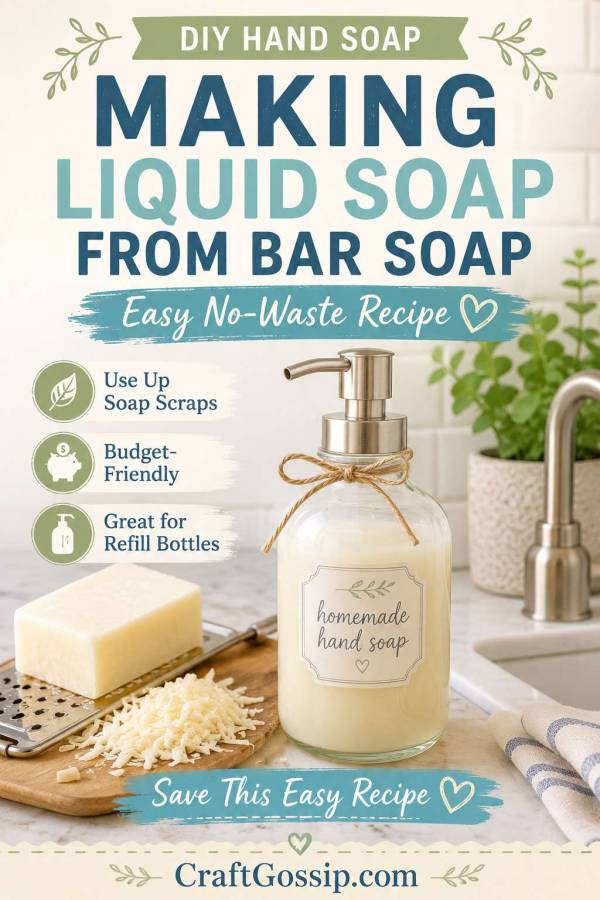
Making liquid soap from bar soap is one of those wonderfully practical homemade projects that makes you feel just a little bit smug in the best possible way. You know those tiny slivers of soap that sit by the sink looking far too useful to throw away, but far too annoying to actually wash with? This is their moment.
Instead of tossing them into the bin or letting them form a sad little soap graveyard in the bathroom cupboard, you can turn leftover bar soap into liquid hand soap with just a few simple ingredients.
This is not complicated soap making. There is no lye involved, no curing time, and no fancy equipment. It is more of a clever household hack than a full soap-making recipe, which makes it perfect if you are new to DIY bath and body projects or just trying to stretch your supplies a little further.
And honestly, who doesn’t love getting one more useful thing out of something that was about to be wasted?
Why Make Liquid Soap From Bar Soap?
Making liquid soap from bar soap is a great way to reduce waste, save money, and use up those leftover soap ends that seem to multiply around the house.
It is especially handy if you:
- Have leftover soap scraps from the shower or bathroom sink
- Prefer liquid hand soap at the basin
- Want a budget-friendly refill for soap dispensers
- Are trying to reduce plastic bottle waste
- Have handmade soap bars that are too small to use comfortably
- Want an easy homemade soap project without lye
If you already enjoy making handmade soap, this is also a nice way to use up imperfect bars, end cuts, or soap scraps from trimming. Not every handmade soap bar turns out gift-worthy, but almost all of them can still be useful.
For more handmade soap ideas, you can browse our full collection of soap making recipes on CraftBits, including melt and pour soap, cold process soap, and easy giftable bath projects.
Is This Real Liquid Soap?
Technically, this method creates a liquid soap-style hand wash by dissolving grated bar soap in water. Traditional liquid soap is usually made with potassium hydroxide and a different soap-making process.
But for everyday handwashing at home, this bar-soap method works beautifully when made in small batches and stored properly.
Think of it as a homemade liquid hand soap refill rather than a commercial liquid soap duplicate. It may be a little more rustic, it may need a shake now and then, and depending on the bar soap you use, it may thicken or separate slightly over time. That is normal.
Homemade soap does like to remind us it has a personality.
What You Need
1 cup grated or finely chopped bar soap
4 cups distilled water
1 tablespoon vegetable glycerin
Optional: 5–10 drops skin-safe essential oil or soap-safe fragrance oil
Optional: natural preservative, if storing for more than a short time
Clean saucepan
Whisk or spoon
Stick blender, optional
Clean soap dispenser or pump bottle
Funnel
Choosing The Best Bar Soap
The soap you choose will affect the final texture, scent, and feel of your liquid soap.
Plain, unscented, natural, or handmade soap bars work well. Moisturising soaps can also work, but they may create a thicker or creamier mixture. Very creamy beauty bars or detergent-style bars can sometimes behave differently, so start with a small test batch first.
Good options include:
- Castile-style bar soap
- Handmade cold process soap
- Mild glycerin soap
- Unscented natural soap
- Leftover soap scraps
- Gentle hand soap bars
Avoid using very gritty exfoliating bars in a pump bottle, as the scrubby bits may clog the dispenser. If you are using leftover handmade soap with herbs, oats, petals, or rough additives, strain the mixture before bottling.
If you love handmade soap projects, our Dettol hand soap recipe is another simple hand soap idea with a nostalgic clean scent.
How To Make Liquid Soap From Bar Soap
Grate or finely chop your bar soap. The smaller the pieces, the faster they will dissolve. A box grater works well, but if you are using soft leftover soap scraps, you can chop them with a knife.
Add the distilled water to a saucepan and warm it over low to medium heat. You do not need a rolling boil. Warm water is enough to help the soap dissolve.
Add the grated soap to the warm water and stir gently until the soap has melted. This can take several minutes depending on the type of soap. Try not to whisk too aggressively or you may end up with a mountain of bubbles, which sounds fun until you are trying to pour it into a bottle.
Once the soap has dissolved, remove the saucepan from the heat.
Stir in the vegetable glycerin. Glycerin helps improve the feel of the soap and gives the finished liquid hand soap a smoother texture.
Let the mixture cool completely. As it cools, it will thicken. This may take several hours, and overnight is even better.
Once cooled, check the texture. If it is too thick, blend in a little more distilled water. If it is too thin, rewarm it gently and add a little more grated soap.
Use a stick blender if needed to smooth the mixture, then pour it into a clean soap dispenser using a funnel.
Label the bottle and store any extra liquid soap in a clean jar or bottle.
How Thick Should Homemade Liquid Soap Be?
Homemade liquid soap made from bar soap can vary a lot in texture. Some batches turn out silky and pourable, while others become more gel-like after sitting overnight.
If your soap is too thick, add more distilled water a little at a time and stir or blend until it reaches the consistency you like.
If your soap is too watery, add a little more grated soap and gently warm it again until dissolved.
The finished soap does not need to look exactly like shop-bought liquid soap. It just needs to pump, lather, and feel nice on your hands.
Do You Need A Preservative?
This is the part many homemade recipes skip, but it is important.
Once you add water to a product, it becomes more vulnerable to bacteria, yeast, and mould. If you are making a small batch to use quickly, you can keep things simple by using clean tools, distilled water, and using the soap within a short time.
For longer storage, you should look into a suitable broad-spectrum preservative designed for water-based bath and body products.
If you do not want to use a preservative, make smaller batches and use them promptly. I would rather make a small fresh batch than have a giant mystery bottle sitting under the sink for six months. We all have enough questionable things hiding in cupboards already.
Can You Add Essential Oils Or Fragrance Oils?
Yes, but only use skin-safe essential oils or soap-safe fragrance oils.
If your bar soap is already scented, you may not need to add anything extra. In fact, adding too much scent can make the finished liquid hand soap overpowering.
Good scent ideas for homemade liquid hand soap include:
- Lavender
- Lemon
- Sweet orange
- Peppermint
- Eucalyptus
- Rosemary
- Lemongrass
- Tea tree
- Rose geranium
- Coconut
- Cucumber melon
If you are using fragrance oil, make sure it is suitable for skin and bath products. Candle fragrance oils are not automatically safe for soap.
For more help choosing scent, our guide to fragrance oils for soap making is a useful companion article to link here once published.
Can You Use Soap Scraps?
Yes, and soap scraps are perfect for this.
Keep a small jar or container in the bathroom or laundry for leftover soap ends. Once you have enough, grate or chop them and turn them into liquid soap.
Just be aware that mixing lots of different strongly scented soaps can create a fragrance that is either surprisingly lovely or deeply confusing. Lavender, lemon, sandalwood, and oatmeal can be charming together. Mint, rose, cinnamon, and coffee? That may be a bathroom adventure nobody asked for.
If you make handmade soap regularly, save the end cuts and trimmings. They are ideal for making liquid soap from bar soap, rebatching, or creating simple home-use soap projects.
Troubleshooting Homemade Liquid Soap
If your liquid soap separates, give it a shake or blend it again. Some separation is normal, especially with handmade bar soaps.
If it becomes too thick, add more distilled water.
If it is too thin, add more grated soap and reheat gently.
If the pump clogs, strain the soap and avoid using bars with heavy botanicals, oatmeal, zest, or exfoliants.
If it smells odd, changes colour dramatically, grows mould, or develops a strange texture, discard it.
Homemade does not mean indestructible. When in doubt, toss it and make a fresh batch.
Tips For Better Homemade Liquid Hand Soap
Use distilled water instead of tap water for a cleaner, more consistent result.
Grate the soap finely so it melts faster.
Let the mixture sit overnight before judging the texture.
Make small batches until you know how your chosen soap behaves.
Use a foaming soap bottle only if your mixture is very thin.
Choose a pump bottle with a wider tube if your soap is thick.
Label your bottle with the date made.
Keep extra soap in a clean sealed jar.
A basic kitchen grater, funnel, stick blender, and reusable soap dispenser are all useful for this project. If you are stocking up, Amazon is handy for simple soap dispensers, glass pump bottles, funnels, and small digital scales for bath and body recipes.
Easy Variations
For lavender hand soap, use a plain bar soap and add a few drops of lavender essential oil.
For lemon kitchen soap, use a mild soap bar and a small amount of lemon or lemongrass essential oil.
For extra-gentle bathroom soap, use an unscented bar soap and leave out extra fragrance.
For a creamy hand soap, use a moisturising handmade soap bar and add a little extra glycerin.
For a zero-waste soap refill, collect leftover soap scraps until you have enough for a batch.
You can also use this method to refill pretty soap dispensers for guest bathrooms, handmade gift baskets, or market stall display sinks.
How To Store Homemade Liquid Soap
Pour your finished liquid soap into a clean pump bottle and keep it near the sink for regular handwashing.
Store extra soap in a clean jar or bottle with a lid. Keep it in a cool spot and use it within a reasonable time, especially if you have not added a preservative.
For gifting, I recommend making the soap fresh, adding a label with the ingredients, and including a note that it should be used promptly.
This is a lovely practical gift when paired with a handmade washcloth, a small nail brush, or a simple soap dish. It is not fussy, but it is useful — and useful handmade gifts are often the ones people actually keep using.
Why This Recipe Is Worth Trying
Making liquid soap from bar soap is simple, thrifty, and satisfying. It turns leftover soap scraps into something practical, saves money on liquid hand soap refills, and gives you a gentle introduction to DIY bath and body making without needing specialist soap-making equipment.
It is also a good reminder that not every homemade project needs to be complicated to be worthwhile. Sometimes the best DIY ideas are the ones that use what you already have, solve a small everyday problem, and make you feel just a bit more resourceful every time you wash your hands.




Leave a Reply