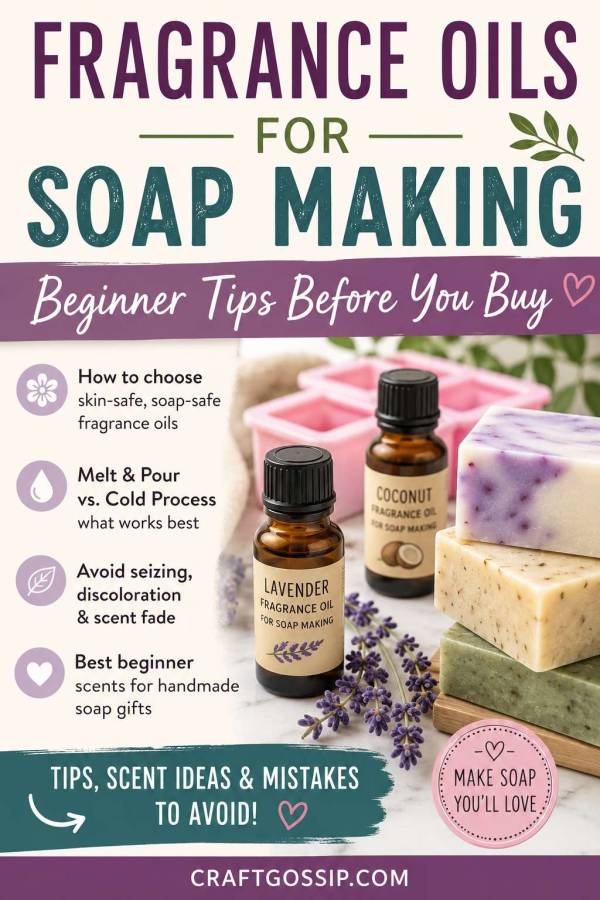
Choosing fragrance oils for soap making is one of those little decisions that can completely change your handmade soap — sometimes beautifully, sometimes in a “why has this suddenly turned brown and gone lumpy?” sort of way.
If you have ever stood in front of a shelf of fragrance oils wondering whether you need lavender, vanilla, sandalwood, coconut, lemon verbena, cucumber melon, or something called “midnight rain on a cashmere cloud,” you are not alone. Soap scents are a rabbit hole, and like most craft rabbit holes, they come with both joy and a tiny bit of chaos.
The good news? Once you understand how fragrance oils behave in soap, choosing the right one becomes much easier.
Fragrance oils for soap making are specially blended scents designed to be used in handmade bath and body products. They are different from perfume oils, candle oils, diffuser oils, and essential oils, and not all of them are safe or suitable for soap. If you are making melt and pour soap, cold process soap, or handmade gifts for friends, the fragrance oil you choose matters more than you might think.
What Are Fragrance Oils For Soap Making?
Fragrance oils are concentrated scent blends made from aroma compounds, natural extracts, and sometimes essential oil components. In soap making, they are used to give handmade soap a lasting scent.
Unlike essential oils, which come from plants, fragrance oils can recreate scents that do not exist naturally as essential oils — think vanilla bean, baked apple, coconut cream, ocean breeze, baby powder, coffee, chocolate, or pineapple. That is why they are so popular for fun handmade soaps, seasonal soap gifts, and novelty soap projects.
If you love fruity, bakery, spa, floral, masculine, or festive soap scents, fragrance oils open up a much wider world than essential oils alone.
For beginners, I usually suggest starting with simple melt and pour soap projects before getting too fancy. Our melt and pour soap tutorial for beginners is a good place to begin if you want to experiment without handling lye.
Can You Use Any Fragrance Oil In Soap?
No — and this is where many beginners get caught out.
You need to use fragrance oils that are labelled as skin-safe and suitable for soap making. A fragrance oil made for candles or room sprays may smell gorgeous, but that does not automatically mean it belongs in a bar of soap.
When buying fragrance oils for soap making, look for details such as:
- Skin-safe or body-safe use
- Suitable for melt and pour soap
- Suitable for cold process soap, if that is what you are making
- Recommended usage rate
- IFRA information or safety documentation
- Notes about discoloration
- Notes about acceleration, ricing, or seizing in cold process soap
Those last few sound a little dramatic, don’t they? Sadly, soap has moods. A fragrance oil can behave perfectly in one recipe and be a complete diva in another.
Fragrance Oils For Melt And Pour Soap
Melt and pour soap is the easiest place to start with fragrance oils because the soap base has already gone through the main soap-making process. You melt the base, add colour and scent, pour it into a mold, and let it set.
For melt and pour soap, fragrance oils are usually added once the soap base has melted and cooled slightly. If the base is too hot, some of the scent can evaporate, leaving you with a weaker-smelling bar.
As a general beginner guide, many melt and pour soap recipes use around 1–3% fragrance oil by weight, but always follow the supplier’s usage rate for the exact oil you are using.
If you want to try a fun food-inspired project, our DIY sushi soap tutorial includes beginner-friendly melt and pour options and scent ideas such as lemongrass, cucumber melon, and sea breeze.
Fragrance Oils For Cold Process Soap
Cold process soap is where fragrance oils need a little more respect. Because cold process soap involves lye and active saponification, some fragrance oils can change how your batter behaves.
Some fragrance oils may:
- Accelerate trace, making the batter thicken quickly
- Cause ricing, where the soap batter looks grainy or separated
- Cause seizing, where the batter becomes thick almost instantly
- Discolour the soap, especially if the fragrance contains vanilla or vanillin
- Fade during cure if the scent is too delicate or not suited to cold process soap
This does not mean fragrance oils are bad for cold process soap. It just means you need to read the notes before using them.
For cold process soap, choose fragrance oils specifically tested for cold process use. If a supplier says a fragrance accelerates, save it for a simple one-colour batch rather than an ambitious swirl design. Ask me how many “planned swirls” have become “rustic textured tops” over the years.
Why Does Vanilla Fragrance Oil Turn Soap Brown?
Vanilla-based fragrance oils are famous for causing discoloration in soap. This is usually due to vanillin, a component that can turn soap tan, caramel, brown, or even dark chocolate over time.
This is not necessarily a failure. In fact, brown discoloration can be beautiful in coffee soap, chocolate soap, oatmeal soap, caramel soap, or autumn soap recipes. But if you were hoping for a bright white wedding favour soap, vanilla may not be your best friend.
You can look for vanilla stabilisers or vanillin-free fragrance oils, but results can vary. The safest option is to plan your design around the expected colour change.
A cinnamon apple soap, coffee soap, sandalwood soap, or coconut cream soap can all work beautifully with warmer scent notes. For example, this Christmas cinnamon and apple goat’s milk soap uses both cinnamon and apple fragrance oils for a cosy seasonal scent.
Best Fragrance Oil Scents For Beginner Soap Makers
If you are new to handmade soap, start with fragrance oils that are known to behave well and suit simple designs.
Good beginner fragrance oil options include:
- Lavender
- Oatmeal milk and honey
- Coconut
- Cucumber melon
- Lemongrass
- Sea salt
- Sandalwood
- Fresh linen
- Apple
- Peppermint
- Vanilla-free bakery blends
- Gentle spa-style scents
For men’s soap, woody and earthy fragrances tend to work well. Sandalwood, cedarwood, bay rum, teakwood, leather, amber, and patchouli-style blends are popular choices. Our sandalwood men’s soap recipe is a good example of using a masculine fragrance oil in a simple melt and pour project.
For tropical handmade gifts, pineapple, coconut, lime, mango, and passionfruit are fun options. If you like beachy handmade soap ideas, our pina colada soap recipe is an old favourite and still a cheerful one for summer gifting.
How Much Fragrance Oil Should You Add To Soap?
The amount of fragrance oil you add depends on the soap base, the type of soap, and the safety usage rate of the fragrance oil.
As a broad beginner guide:
- Melt and pour soap often uses around 1–3% fragrance oil by weight
- Cold process soap varies depending on the fragrance and recipe
- Strong scents may need less
- Delicate scents may not survive well in cold process soap
- Always check the supplier’s recommended usage rate
Try not to measure fragrance oils by “a splash” unless you enjoy living dangerously. A small digital scale makes soap making much more consistent, especially if you are making gifts, selling at markets, or trying to repeat a favourite batch.
If you are stocking up on supplies, a good beginner soap-making kit usually includes a digital scale, silicone molds, heat-safe jugs, rubbing alcohol spray, soap-safe colourants, and a few small bottles of soap-safe fragrance oils. Amazon is handy for basic tools like silicone molds and measuring jugs, while specialist soap suppliers are better for properly documented fragrance oils.
Fragrance Oil vs Essential Oil In Soap Making
Fragrance oils and essential oils both have a place in soap making, but they are not the same thing.
Essential oils are plant-derived and often appeal to makers who prefer a more natural approach. However, they can be more expensive, some fade quickly in soap, and not all essential oils are suitable for skin or safe for every user.
Fragrance oils are usually more affordable, more varied, and often stronger in finished soap. They also make it possible to create scents like birthday cake, cotton candy, chocolate fudge, baby powder, coconut cream, and fresh laundry.
I like both, depending on the project. If I am making a simple lavender soap, essential oil may be lovely. If I am making novelty dog poop soap, cupcake soap, watermelon soap, or Christmas pudding soap, fragrance oil is going to do the heavy lifting.
Tips For Choosing Fragrance Oils For Handmade Soap
Before buying a new fragrance oil, check the product notes carefully. A good soap fragrance listing should tell you whether the oil is suitable for your type of soap and what behaviour to expect.
Here are my practical soap-maker checks:
- Check that it is skin-safe
- Check whether it is suitable for melt and pour, cold process, or both
- Read the usage rate
- Look for vanillin content if colour matters
- Read notes about acceleration or seizing
- Buy a small bottle first before committing to a large size
- Test new fragrance oils in a small batch
- Keep notes so you remember what worked
That last one is important. You will absolutely tell yourself you will remember which coconut fragrance behaved beautifully and which one turned your soap batter into mashed potato. You will not. Write it down.
Best Fragrance Oils For Handmade Soap Gifts
For handmade soap gifts, choose scents that are familiar, gentle, and easy to like. Not everyone wants a soap that smells like a mysterious forest after midnight, even if the name is very tempting.
Reliable gift-friendly scents include:
- Lavender and vanilla
- Oatmeal milk and honey
- Coconut cream
- Lemon and poppy seed
- Cucumber melon
- Rose geranium
- Apple cinnamon
- Peppermint
- Lemongrass
- Sea salt and driftwood
- Sandalwood
- Orange and clove
Seasonal soap scents are especially good for gifting. Apple cinnamon and spiced orange are lovely for Christmas, coconut and pineapple work for summer, lavender is beautiful for Mother’s Day, and sandalwood or coffee fragrances make great handmade gifts for men.
For more inspiration, browse our soap making recipes on CraftBits and look at how different scents are matched with colours, textures, and additives.
Common Fragrance Oil Mistakes To Avoid
The biggest mistake beginners make is assuming all nice-smelling oils are safe for soap. They are not.
Avoid these common fragrance oil mistakes:
- Using candle fragrance oil without checking skin safety
- Adding too much fragrance oil
- Ignoring supplier usage rates
- Using perfume or body spray in soap
- Choosing a vanilla fragrance for white soap without expecting discoloration
- Trying a complicated swirl with a fast-accelerating fragrance
- Forgetting to test a new fragrance before making a large batch
Another little trap is scent overload. A soap that smells lovely in the bottle can become overwhelming in the shower if you use too much. More fragrance does not always mean better soap. Sometimes it just means a headache in bar form.
A Simple Beginner Fragrance Oil Testing Method
If you are testing a new fragrance oil, make a tiny batch first.
For melt and pour soap, melt a small amount of base, add the fragrance at the recommended rate, pour into a mini mold, and let it set. Check the scent after 24 hours and again after a week.
For cold process soap, make a small plain batch with no fancy design. Watch how the fragrance behaves when added to the batter. Does it thicken quickly? Does it rice? Does it discolour over the next few days or weeks? Does the scent survive curing?
Keep a notebook or spreadsheet with:
- Fragrance name
- Supplier
- Usage rate
- Soap type
- Behaviour in batter
- Colour change
- Scent strength after cure
- Whether you would buy it again
It sounds fussy, but if you ever sell soap, give soap as gifts, or just want to recreate your favourite batch, these notes are gold.
Fragrance Oils Make Handmade Soap Feel Finished
Fragrance oils are one of the easiest ways to make handmade soap feel special. They can turn a plain bar into a spa-style gift, a festive stocking stuffer, a funny novelty soap, or a beautiful handmade favour.
The trick is choosing oils that are safe for soap, suited to your method, and matched to the look you want. Start small, read the notes, test your scents, and don’t be afraid to keep a few reliable favourites in your soap-making cupboard.
Because once you find a fragrance oil that behaves beautifully, smells amazing, and doesn’t turn your carefully planned pastel soap into pudding brown, you hold onto that bottle like treasure.



Leave a Reply