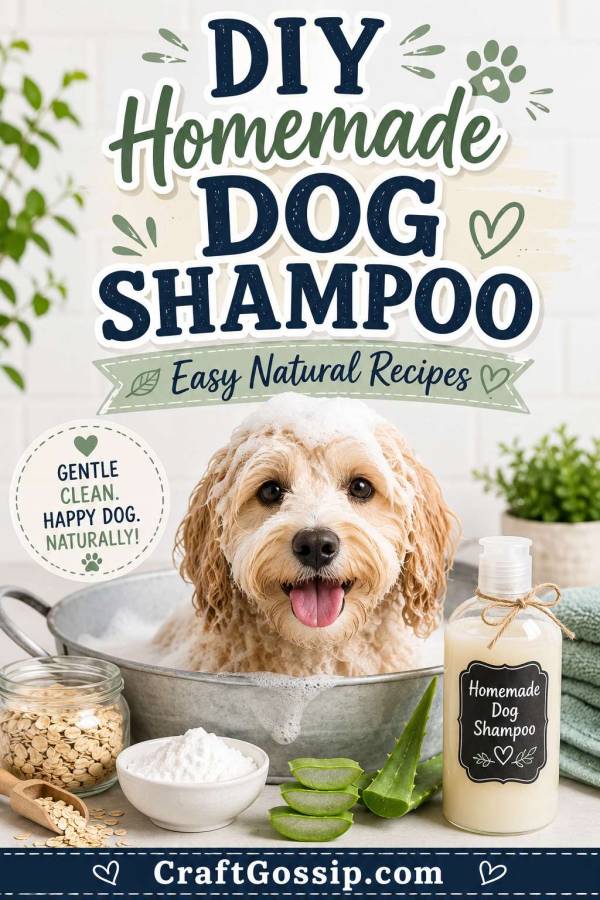
There are few smells quite as powerful as a dog who has found something delightful to roll in. And by delightful, I of course mean something that makes the rest of the household start opening windows and blaming each other.
If you have ever looked at the back of a commercial pet shampoo bottle and wondered what half the ingredients are, making your own simple homemade dog shampoo can be a lovely, practical alternative. These DIY dog shampoo recipes use easy-to-find ingredients such as oats, baking soda, aloe vera and vinegar, and they are handy for those in-between grooming moments when your dog is not quite “mud monster” level, but definitely not sofa-friendly either.
As with anything used on pets, gentle is the key. Dogs have sensitive skin and very sensitive noses, so homemade does not mean we should start tipping every pretty-smelling oil from the cupboard into a bottle. Keep things simple, avoid strong fragrances, and always check with your vet if your dog has allergies, broken skin, hot spots, fleas, ongoing itching or a known skin condition.
If you are already on a homemade cleaning and natural living kick, you might also like our DIY eco-friendly carpet fresh recipe for those times when the dog has claimed the lounge room rug as their personal throne.
Before You Make Homemade Dog Shampoo
A few quick notes before we get to the recipes:
Use lukewarm water, not hot water. Brush your dog before washing if their coat is long, thick or prone to knots. Avoid the eyes, ears, nose and mouth. Rinse really well, because leftover shampoo can make skin itchy. And please do not use human shampoo, as it is usually too harsh for a dog’s skin.
Essential oils should be treated very carefully around pets. Many oils are not suitable for dogs, and some can be dangerous, especially when used directly on the skin. Tea tree oil, in particular, is one I would avoid in homemade dog shampoo unless specifically advised by your vet. Your dog may not appreciate smelling like a spa day anyway — most of them are thrilled with Eau de Backyard.
Basic Homemade Dog Shampoo For Smelly Dogs
This is a simple homemade dog shampoo recipe for ordinary doggy odour, muddy paws and general “you have been outside having adventures” situations.
Ingredients
1 litre warm water
1 cup white vinegar or apple cider vinegar
1 cup gentle baby shampoo or a mild unscented castile-style liquid soap
How To Use
Mix the ingredients together in a large jug or bottle. Wet your dog’s coat thoroughly with lukewarm water, then work the shampoo through the fur, avoiding the face and ears. Let it sit for a minute or two, then rinse very well.
The vinegar helps cut through odour, while the mild soap helps lift dirt and grime. Do not use this on broken, irritated or scratched skin, because vinegar can sting.
If you are trying to make more of your everyday household products from scratch, you may also enjoy this homemade laundry detergent recipe — because between dog towels, muddy blankets and “why is this wet?” laundry, pet homes do seem to produce extra washing.
Homemade Dog Shampoo For Sensitive Skin
This gentle version is a better choice if your dog has slightly dry or sensitive skin, but it is still for general washing only. Ongoing itching, redness or flaking should always be checked by a vet.
Ingredients
1 litre warm water
1 cup gentle baby shampoo or unscented mild liquid soap
1 cup apple cider vinegar or white vinegar
1/3 cup vegetable glycerine
3 tablespoons aloe vera gel
How To Use
Combine everything in a bottle and shake gently. Apply to your dog’s wet coat, working it in with your hands. Rinse thoroughly.
The aloe vera and glycerine help make this feel a little more soothing than a plain shampoo mixture. Use a small amount first if your dog is prone to sensitivities.
Oatmeal Dog Shampoo For Dry, Itchy Coats
Oatmeal is a classic ingredient for dry skin, and it is one of my favourite pantry-style ingredients for a gentle dog bath. This recipe is especially useful when the weather changes and your dog’s coat starts looking a bit dull or flaky.
Ingredients
1 cup plain oatmeal, ground into a fine powder
4 cups warm water
1 teaspoon gentle baby shampoo or mild unscented liquid soap
1 cup baking soda
How To Use
Grind the oatmeal until it is as fine as you can get it. A blender or food processor works well. Mix the oatmeal powder with the baking soda, warm water and gentle soap.
Massage the mixture into your dog’s wet coat and leave it for 3–5 minutes if your dog will tolerate standing still. If they are anything like mine, you may get about 47 seconds before the full-body shake begins. Rinse thoroughly.
This is a good recipe for dogs who need something softer than a regular wash, but it is not a replacement for veterinary treatment if your dog is scratching constantly.
Dry Homemade Pet Shampoo For Quick Freshening
Some dogs seem to get dirty immediately after a bath. Honestly, it is almost impressive. This dry shampoo idea is handy when your dog needs a quick freshen-up but not a full wash.
Ingredients
1 cup baking soda
How To Use
Sprinkle a small amount of baking soda lightly over your dog’s coat, avoiding the face, eyes, nose and mouth. Let it sit for a few minutes, then brush it out thoroughly with a pet brush.
This helps absorb odour and can freshen the coat between baths. Use sparingly, and avoid using it on very dry, irritated or broken skin.
For more pet-friendly DIY ideas, the dry pet shampoo on CraftBits is another simple one to keep bookmarked for those “visitors are coming and the dog smells questionable” days.
Rosemary Coat Rinse For A Shiny Dog Coat
This is a rinse rather than a shampoo, and it can be used after washing to help the coat look fresh and glossy.
Ingredients
2 tablespoons dried rosemary leaves
4 cups boiling water
How To Make It
Pour the boiling water over the rosemary leaves and allow it to steep until completely cool. Strain out the leaves.
After shampooing and rinsing your dog, pour the cooled rosemary water over the coat as a final rinse, avoiding the face. Do not rinse it out unless your dog seems bothered by it.
Simple Dog Coat Conditioner
This is a very light conditioning rinse for coats that look a little dull. Use it sparingly, because too much oil can make a coat feel greasy.
Ingredients
2 tablespoons melted coconut oil
1/4 cup apple cider vinegar
2 cups warm water
How To Use
Mix well and apply a small amount through the coat after shampooing. Rinse thoroughly. This is best for dogs with thicker or drier coats rather than fine coats that become oily quickly.
How Often Should You Wash Your Dog?
Most dogs do not need weekly baths unless your vet or groomer recommends it, or unless they have rolled in something truly memorable. Bathing too often can dry out the skin and strip natural oils from the coat.
A good rhythm for many dogs is bathing when they are dirty, smelly or uncomfortable, with regular brushing in between. Long-haired dogs, double-coated breeds and dogs with allergies may need more specific grooming routines.
If your dog has dry skin, the cause could be diet, allergies, fleas, mites, weather changes, grooming products or a medical issue. Puppies can also go through coat changes as they grow. Before trying to fix flaky skin from the outside, it is worth looking at food, flea prevention, environment and general health.
Extra DIY Ideas For Dog Owners
If you like making things for your dog, there are some lovely DIY pet projects to try beyond shampoo. A no-sew easy dog bed is a great beginner-friendly project, especially if your dog believes every room should have a bed in it. You can also make a recycled T-shirt dog tug toy if your fabric stash has started breeding in the cupboard.
And for a little homemade treat-making, these dog biscuit recipes are a fun kitchen project for pet birthdays, playdates or just because your dog has perfected that sad “I have never been fed” face.
Pet Safety Notes
Do not use homemade dog shampoo on cats unless the recipe is specifically cat-safe. Cats process ingredients differently and can be much more sensitive to essential oils and grooming products.
Avoid using essential oils in dog shampoo unless advised by a vet. Never apply undiluted oils to a dog’s skin. Avoid tea tree oil, pennyroyal, wintergreen and other strong essential oils in DIY pet care.
Do not use vinegar-based recipes on open skin, scratches, rashes or hot spots.
If your dog is itching constantly, losing hair, developing sores, smelling yeasty, shaking their head, licking paws excessively or reacting badly after a bath, stop using the product and contact your vet.
A Handy Homemade Option For The Occasional Stinky Dog
Homemade dog shampoo is one of those practical DIY recipes that is worth keeping in your notes, especially if you have a dog who enjoys puddles, grass rolling, beach days or suspicious backyard investigations.
Start with the gentlest recipe, rinse well, and keep the fragrance-free approach in mind. Your dog may not come out smelling like a bouquet of lavender, but they will be cleaner, more comfortable, and hopefully slightly less determined to roll in something terrible five minutes later.



Leave a Reply