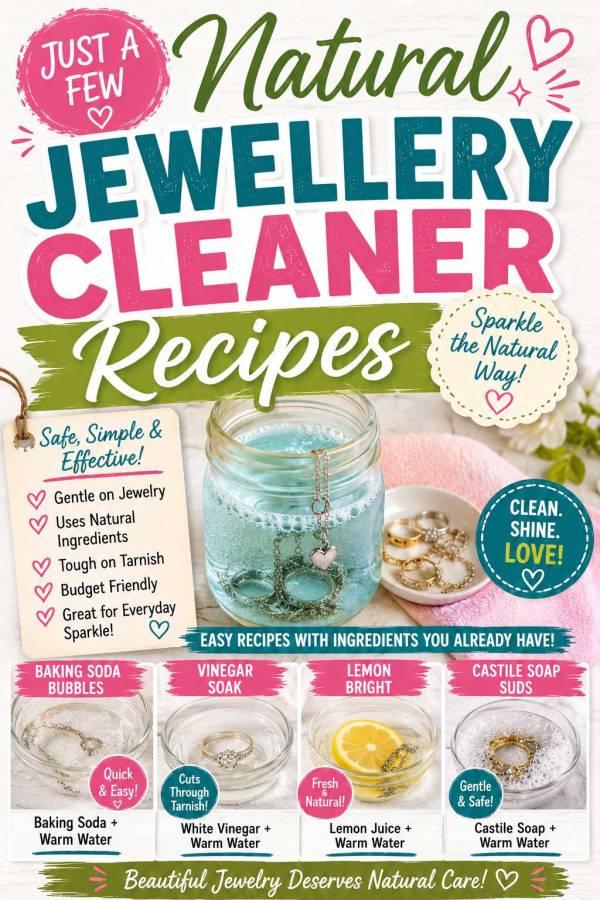
There is something mildly horrifying about looking down at a favourite ring or necklace and realising it has gone from “sparkly and loved” to “did I dig this out of the back of a drawer from 1998?” Jewellery has a funny way of collecting everything — lotion, soap residue, perfume, hairspray, body oils, dust, and whatever mystery fluff lives in the bottom of handbags.
The good news is that you do not always need a commercial jewellery cleaner to bring back a bit of shine. A few simple pantry and laundry cupboard ingredients can help freshen up everyday pieces, especially if you are dealing with dull silver, slightly grubby gold jewellery, or costume pieces that just need a gentle clean.
This is one of those practical homemade cleaning recipes that feels very old-school in the best possible way. It is frugal, useful, and a good reminder that our grandmothers were making half their cleaning cupboard from basics long before “natural cleaning” became trendy. If you enjoy simple DIY cleaning ideas, you may also like our easy homemade laundry soap recipe or this DIY toilet paper spray recipe for another bathroom-cupboard-style homemade solution.
Before You Clean Jewellery At Home
Before you dunk everything into a bowl and hope for the best, take a moment to check what your jewellery is made from. Not every piece should be treated the same way.
Avoid soaking:
- pearls
- opals
- turquoise
- soft or porous stones
- glued costume jewellery
- antique pieces with delicate settings
- plated jewellery where the finish is already wearing
- jewellery with unknown stones or finishes
Pearls are especially fussy little things. Never use vinegar on pearls, as acidic cleaners can damage their surface. If in doubt, stick with a soft damp cloth or ask a jeweller before cleaning anything sentimental or valuable.
Also, never mix ammonia-based cleaners with chlorine bleach. That is one of those “absolutely not, not even once” household safety rules.
Basic Homemade Jewellery Cleaner Recipe
This simple homemade jewellery cleaner is useful for everyday metal jewellery that needs a light refresh. It is best for sturdy pieces, not delicate pearls or porous stones.
You Will Need
- 1 tablespoon mild dishwashing liquid
- 1 tablespoon baking soda
- 1 tablespoon household ammonia
- 3 cups warm water
- Glass jar with lid
- Soft toothbrush or clean mascara wand
- Soft lint-free cloth
How To Make It
Combine the dishwashing liquid, baking soda, ammonia, and warm water in a bowl. Stir gently until mixed.
Pour the solution into a clean glass jar, label it clearly, and store it safely out of reach of children and pets.
To use, place suitable jewellery into the solution for 1 to 10 minutes, depending on how dull or dirty the piece is. Swish the jewellery gently to loosen grime from small crevices.
Use a soft toothbrush or a well-washed mascara wand to carefully clean around settings, chain links, clasps, and detailed areas. Rinse thoroughly with clean water and dry completely with a soft cloth.
This is the sort of job I always think will take ages, and then five minutes later I am standing there admiring a ring I had practically forgotten was shiny.
Gentle Dish Soap Jewellery Cleaner For Everyday Pieces
For most everyday jewellery, the safest place to start is not with the strongest cleaner. A gentle dish soap soak is often enough to remove lotion, oil, makeup, and general daily grime.
You Will Need
- A small bowl of warm water
- A few drops of mild dish soap
- Soft toothbrush
- Soft cloth
How To Use It
Add a few drops of dish soap to warm water and stir gently. Place suitable jewellery into the bowl and let it soak for 10 to 15 minutes.
Use a soft toothbrush to clean around the settings and any little grooves where dirt likes to settle. Rinse well and dry completely.
This method is a nice first step for rings, chains, earrings, and bangles that are not heavily tarnished. It is also a good habit to get into if you wear hand cream or sunscreen regularly, because those products can dull jewellery surprisingly quickly.
For more gentle DIY cleaning inspiration, our foaming hand soap tutorial is another handy way to stretch simple ingredients around the home.
How To Clean Gold Jewellery At Home
Gold jewellery often looks dull because it has collected body oils, soap, and product residue rather than because the gold itself is damaged. A gentle clean can make a noticeable difference.
For plain gold jewellery, you can use the dish soap method above. If the piece is sturdy and does not contain pearls or porous stones, some people also use cider vinegar as a quick cleaner.
Cider Vinegar Method For Plain Gold Jewellery
Pour cider vinegar into a shallow glass dish. Place the gold jewellery into the vinegar, making sure the piece is covered but not tangled with other jewellery.
Let it sit for around 10 to 15 minutes. Remove the jewellery, rinse it well, and wipe dry with a soft clean cloth.
Do not use this method on pearls, opals, turquoise, soft stones, plated jewellery, or anything with glue. When jewellery has stones or settings, gentle soapy water is usually the safer homemade option.
How To Clean Silver Jewellery Naturally
Silver is the one that tends to cause the most drama because tarnish can make it look far worse than it is. Luckily, the classic aluminium foil and baking soda method can help remove tarnish from many plain silver pieces.
You Will Need
- Glass bowl
- Aluminium foil
- Baking soda
- Boiling water
- Tongs or fork
- Soft cloth
How To Clean Silver Jewellery
Line a glass bowl with aluminium foil, shiny side facing upward.
Place the silver jewellery in the bowl, making sure the jewellery touches the foil.
Sprinkle baking soda over the jewellery until the tarnished areas are covered.
Carefully pour boiling water over the jewellery so it is fully immersed.
Let it sit for 3 to 5 minutes. If the jewellery is only lightly tarnished, start with less time.
Use tongs or a fork to remove the jewellery carefully, then rinse under cool water and dry thoroughly with a soft cloth.
This method is best for plain silver pieces. Be cautious with silver jewellery that has gemstones, plating, glued elements, or deliberately oxidised details. Some silver jewellery has darkened areas added on purpose to highlight the design, and aggressive cleaning may remove that aged effect.
If you are making or repairing jewellery as well as cleaning it, you may also enjoy browsing the Jewelry Making section on CraftGossip for ideas, tutorials, and inspiration.
What Not To Use On Jewellery
A homemade jewellery cleaner can be brilliant, but only when matched to the right material. Some common household ingredients are too harsh for certain pieces.
Avoid using vinegar on pearls or porous stones. Avoid abrasive scrubbing on plated jewellery. Avoid soaking costume jewellery that may have glued stones. Avoid toothpaste, as it can be too abrasive for many finishes. Avoid bleach completely.
And please do not clean jewellery over an open sink drain unless you enjoy the particular panic of trying to rescue an earring back from plumbing. Put a cloth or strainer in the sink first. Ask me how many times I learned that lesson the hard way.
How Often Should You Clean Jewellery?
For jewellery you wear daily, a gentle clean every couple of weeks can help prevent buildup. Rings may need cleaning more often because they come into contact with soap, moisturiser, hand sanitiser, food prep, and all the little everyday messes we pretend we are not constantly touching.
Pieces worn occasionally can be cleaned before storing and then given a quick polish before wearing.
A soft jewellery cloth is worth keeping in a drawer or travel pouch. It is one of those inexpensive little tools that makes you feel far more organised than you actually are.
Simple Jewellery Care Tips To Keep Pieces Cleaner Longer
Remove jewellery before swimming, cleaning, gardening, showering, or applying lotions and perfume.
Store jewellery in a dry place, ideally separated so chains do not tangle and softer metals do not scratch. Small pouches, jewellery boxes, drawer dividers, and even tiny zip bags can help keep pieces protected.
Let perfume, hairspray, sunscreen, and moisturiser dry before putting jewellery on. This one small habit can make a big difference, especially with costume jewellery and plated pieces.
For special, expensive, antique, or sentimental jewellery, professional cleaning is still the safest option. Homemade jewellery cleaner recipes are wonderful for everyday maintenance, but they are not a replacement for a jeweller’s advice when a piece really matters.
Printable Quick Guide: Which Cleaner Should I Use?
For everyday gold jewellery
Use warm water and mild dish soap. For plain sturdy gold, cider vinegar may be used cautiously.
For plain silver jewellery
Use the aluminium foil, baking soda, and boiling water method.
For pearls
Use only a soft damp cloth. Do not use vinegar or soaking solutions.
For costume jewellery
Use a lightly damp cloth. Avoid soaking, especially if stones are glued.
For gemstone jewellery
Use mild dish soap and warm water only if the stones are safe to clean this way. Avoid vinegar and harsh cleaners.
For antique or valuable jewellery
Ask a jeweller before using any homemade cleaner.
A Little Shine Without The Fancy Bottle
Homemade jewellery cleaner is one of those wonderfully practical DIY ideas that saves money, uses what you already have, and gives instant satisfaction. There is something very pleasing about taking a tired-looking ring, giving it a quick clean, and suddenly remembering why you loved it in the first place.
Start gently, avoid soaking delicate pieces, and always test carefully when you are unsure. Your jewellery box will look a little brighter, and you might even rediscover a few forgotten favourites hiding at the bottom.



I found that just soaking my jewelry in Dawn hand renewal work great. I just let it sit over night then rinse they are very sparkly
Thanks for the tip….I can already tell…I’m gonna love your site! =)
I love your tips and your different craft ideas that you have and I am looking forward to trying this but I am a spelling and grammar freak and I am disppointed that you misspelled the word jewerly in the whole article. Thanks again for all your tips!
Plain old toothpaste is a great quick alternative to cleaning up my diamond.
Toothpaste has abrasives in it. Not a good idea to clean fine jewelry with an abrasive.
Some gemstones are soft and will certainly dull over time.
Too bad Debbie, the spelling freak didn’t use spell check herself. She didn’t spell jewelry correctly either.
When you say dishwashing detergent, do you mean like the powder stuff you put in your dishwasher? Or would dishsoap work?
Besides the one recipe for cleaning platinum, do any of the recipes harm gemstones or cubic zirconia? Thanks.
I used the baking soda and boiling water cleaning method on a Technibond bracelet with synthetic tanzanite and cubic zirconia; it worked great.
How do you clean David Yurman jewelry? The black areas of the metal? I was told that you must be careful to avoid removing the black areas.
To Debbie, I’m not sure why you’re posting criticism as you yourself spelled jewelry wayyy wrong lmao, plus your entire post is just a big run on sentence. Also, the writer of this page is spelling jewelry the British (and maybe all of Europe?) way. They spell it with 2 Ls.
The reason I’m actually commenting though is to ask it anyone has used the tin foil/baking soda/boiling water method on sterling silver that has cubic zirconia and a rhodium plating? I’m hesitant to use it and can’t seem to find an answer anywhere.